Camargue horses, endless lavender fields, timeless villages - Explore the South of France through your lens.
10 Essential Tips Before Photographing the White Horses of the Camargue
Coming to the Camargue to photograph its famous white horses is a dream for many photographers. But without thorough trip planning, there's a real risk of going home empty-handed, or deeply disappointed. By following these 10 tips, you will maximize your chances of returning from the Camargue with breathtaking images of white horses.
PHOTO TIPSCAMARGUE HORSE
Patrice Aguilar
7/1/202618 min read
What you will learn in this article :
PACK THE RIGHT CAMERA GEAR
RESPECT THE HORSES, THE ENVIRONMENT AND SAFETY RULES
JOIN A LOCAL PHOTOGRAPHY WORKSHOP
READY TO PHOTOGRAPH ONE OF EUROPE'S MOST SPECTACULAR WILDLIFE DESTINATIONS
Introduction
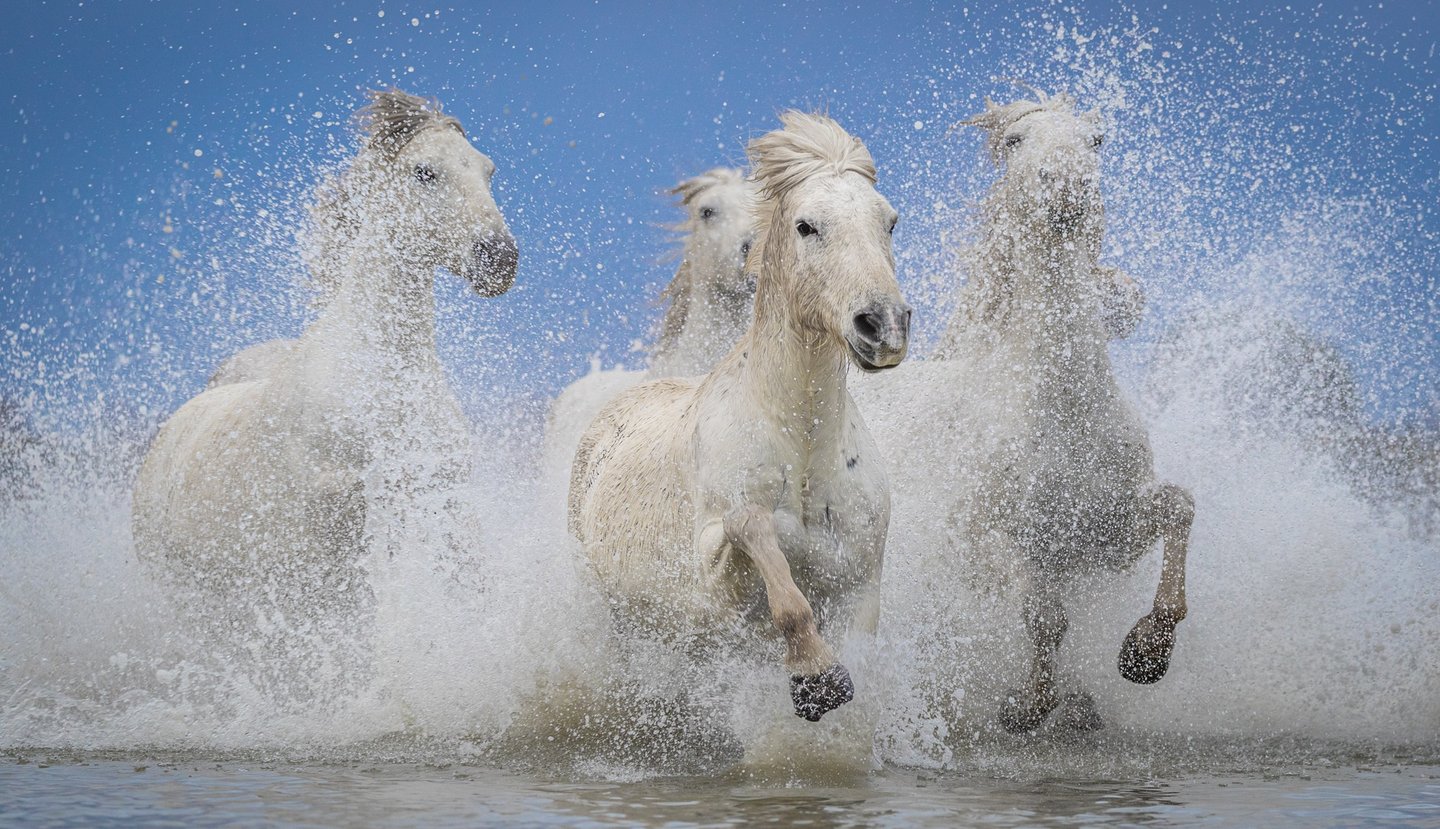
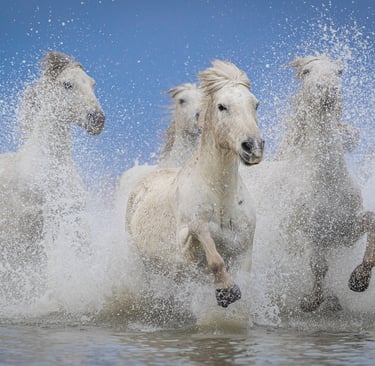
There are few places in Europe where photography and wilderness come together as beautifully as they do in the Camargue. Located in the south of France, this unique wetland, characterized by its regional nature park, is home to endless marshes, pristine beaches, pink flamingos and, above all, the legendary White Horses of the Camargue. Seeing these magnificent horses galloping through shallow water at sunrise is an unforgettable experience and a dream for photographers from around the world.
Yet capturing truly memorable images is not simply a matter of being in the right place. Every year, many photographers arrive with high expectations but leave disappointed. They underestimate the weather, choose the wrong equipment, overlook the importance of light, or fail to understand the horses' behavior. The result is often a collection of ordinary photographs that don't reflect the magic of this extraordinary landscape.
Whether you're planning your first trip to the Camargue or returning to improve your portfolio, careful preparation will make all the difference.
In this article, you'll discover 10 essential tips that will help you prepare for your adventure, avoid the most common mistakes and return home with spectacular images of one of France's most iconic wildlife destinations.
☀️ Choose the Right Season
One of the biggest mistakes photographers make is assuming that the White Horses of the Camargue can be photographed under the same conditions all year round. While the horses are present throughout the year, the quality of the light, the weather, the number of visitors and even the atmosphere of the landscape change dramatically with the seasons.
For photography, spring and autumn are generally the most rewarding times to visit. Temperatures are pleasant, the wetlands are full of life and the soft morning light creates beautiful colours and reflections. These seasons also offer the perfect balance between comfortable weather and relatively quiet locations, making it easier to photograph the horses in natural surroundings.
Winter can also be an excellent choice for photographers. The low sun stays close to the horizon throughout the day, producing long shadows and warm golden light. Early mornings are often accompanied by mist, adding a mysterious atmosphere that can transform an ordinary scene into something truly magical. The beaches and marshes are also much quieter than during the busy summer months.
Summer, on the other hand, presents a few challenges. The light quickly becomes harsh after sunrise, temperatures can be very high and popular locations attract many visitors. If you choose to visit during this season, plan your photography sessions as early as possible in the morning or during the last hour before sunset to take advantage of the best light.
Whatever the season, always keep an eye on the weather forecast. A dramatic sky after a storm, low clouds or even strong winds can create far more striking images than a perfectly clear blue sky. Some of the most memorable photographs are made when conditions are less than perfect.
Photographer's Tip: Don't chase perfect weather. In the Camargue, changing light and dramatic conditions often create the most powerful and unique photographs. If you want to know more about when to come to the Camargue, read our article : Best Time of Year to Photograph the White Horses of the Camargue
📸 Pack the Right Camera Gear
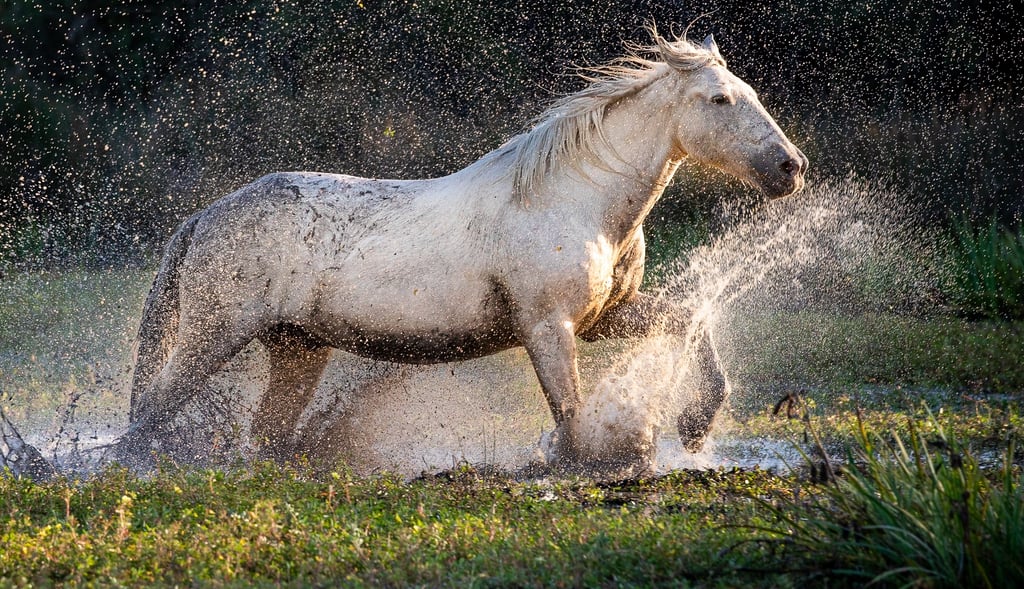
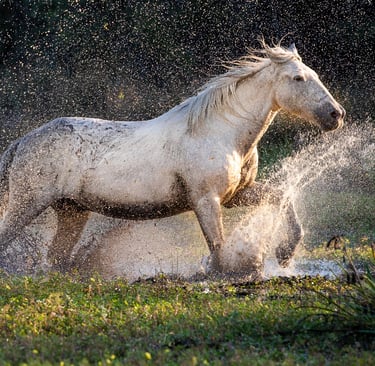
Photographing the White Horses of the Camargue often means working in demanding conditions. You'll be shooting before sunrise, standing in wet sand, surrounded by saltwater, mud and wind-blown sand. Having the right equipment, and preparing it properly, can make the difference between an unforgettable photography session and a frustrating experience.
If possible, bring two camera bodies. Changing lenses while standing on a beach or in the marshes is never ideal. Fine sand can easily enter your camera, especially on windy mornings. Using one body fitted with a telephoto lens and another with a wider lens allows you to react instantly without exposing your gear to unnecessary risks.
Don't underestimate your power needs. Early starts, continuous autofocus and long bursts while the horses are galloping through the water consume batteries much faster than expected. Carry several fully charged spare batteries and keep them somewhere dry and easily accessible.
The same applies to memory cards. Action photography generates hundreds, or even thousands, of images in a single session. Bring multiple high-speed memory cards rather than relying on one large card. This not only gives you more storage but also reduces the risk of losing all your images if a card becomes damaged.
Cleaning equipment is another essential that many photographers forget. A microfiber cloth, a small air blower and a lens cleaning kit will help remove sea spray, dust and fingerprints before they affect your images. Saltwater droplets on the front element can quickly reduce contrast and image quality, especially when shooting into the rising sun.
Finally, remember that the Camargue is a wild coastal environment. A waterproof backpack or rain cover, protective lens filters and a few sealable plastic bags can help protect your equipment from sand, moisture and unexpected weather changes.
Photographer's Tip: Before every sunrise session, prepare your cameras the night before. Charge every battery, format or change memory card and mount the lenses you expect to use. When the horses start running through the water, there won't be time to search through your camera bag.

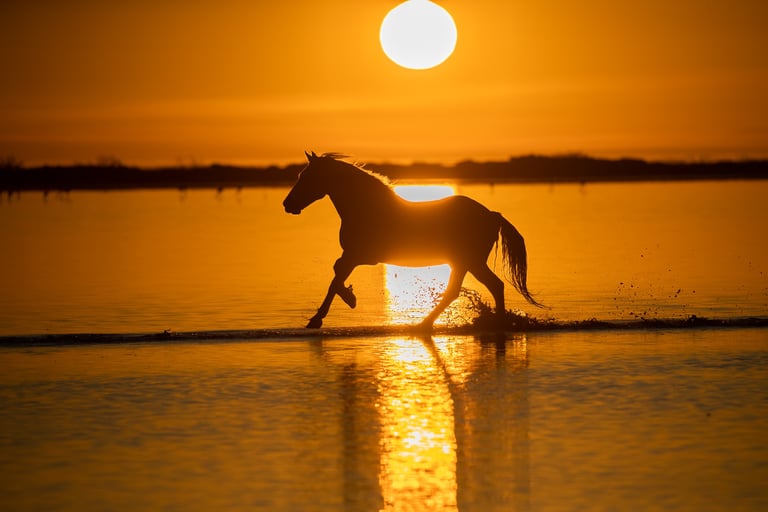
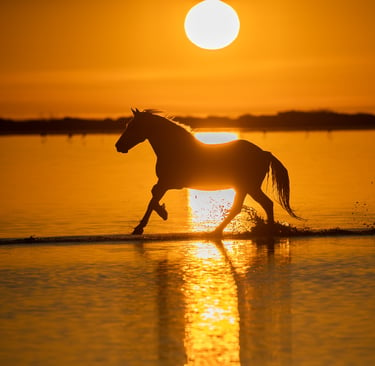
Bring the Right Lens


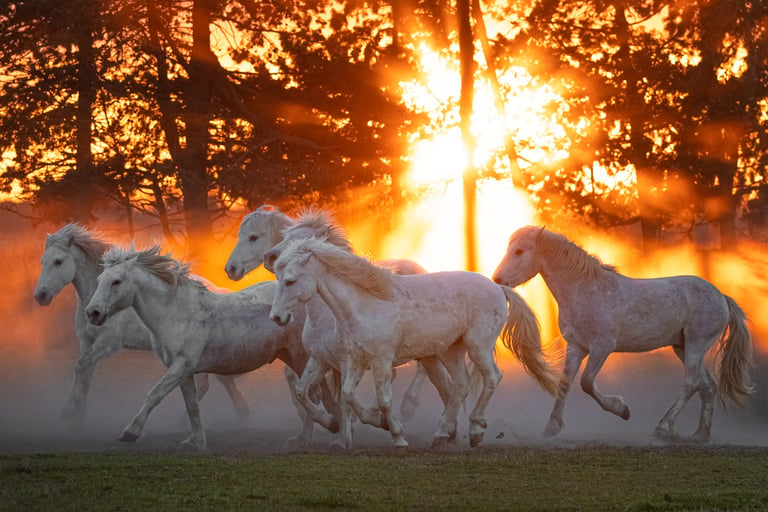
Choosing the right lens is just as important as choosing the right camera. The White Horses of the Camargue move fast, often changing direction without warning, and the scenery around them is every bit as spectacular as the horses themselves. Bringing a versatile selection of lenses will allow you to capture both the action and the beauty of this unique landscape.
A 70–200mm is probably the most versatile lens you can carry. It offers the perfect balance between reach and flexibility, allowing you to photograph galloping horses, intimate portraits and interactions within the herd without constantly changing your position. Whether the horses are running through shallow water or standing quietly in the golden morning light, this focal length adapts beautifully to almost every situation.
If you want to isolate individual horses, capture dramatic splashes or photograph more distant action, a 100–400mm is an excellent choice. The longer focal length lets you compress the background, create striking compositions and capture details that would otherwise be impossible to reach. It is particularly useful when photographing wildlife alongside the horses, such as flamingos or birds of prey commonly seen in the Camargue.
Many photographers focus exclusively on telephoto lenses and forget one essential piece of equipment : a wide-angle lens. Yet some of the most memorable photographs are created by showing the horses within their environment. A focal length between 16mm and 35mm allows you to include dramatic skies, endless beaches, marshes and reflections, telling a much richer visual story about the Camargue.
Remember that great photography is not only about filling the frame with your subject. Sometimes, stepping back and revealing the surrounding landscape creates far more powerful images than a close-up alone.
Photographer's Tip: If you can only bring one lens, choose a 70–200mm or a 100-400mm. But if your goal is to build a truly diverse portfolio, combine a telephoto lens with a wide-angle. You'll return home with a much more complete collection of images that captures not only the horses, but also the soul of the Camargue.
Quick Checklist
✔ 70–200mm for versatility and action.
✔ 100–400mm for distant subjects and dramatic compression.
✔ 16–35mm (or similar) for landscapes and environmental portraits.
✔ Avoid changing lenses in windy or sandy conditions whenever possible.
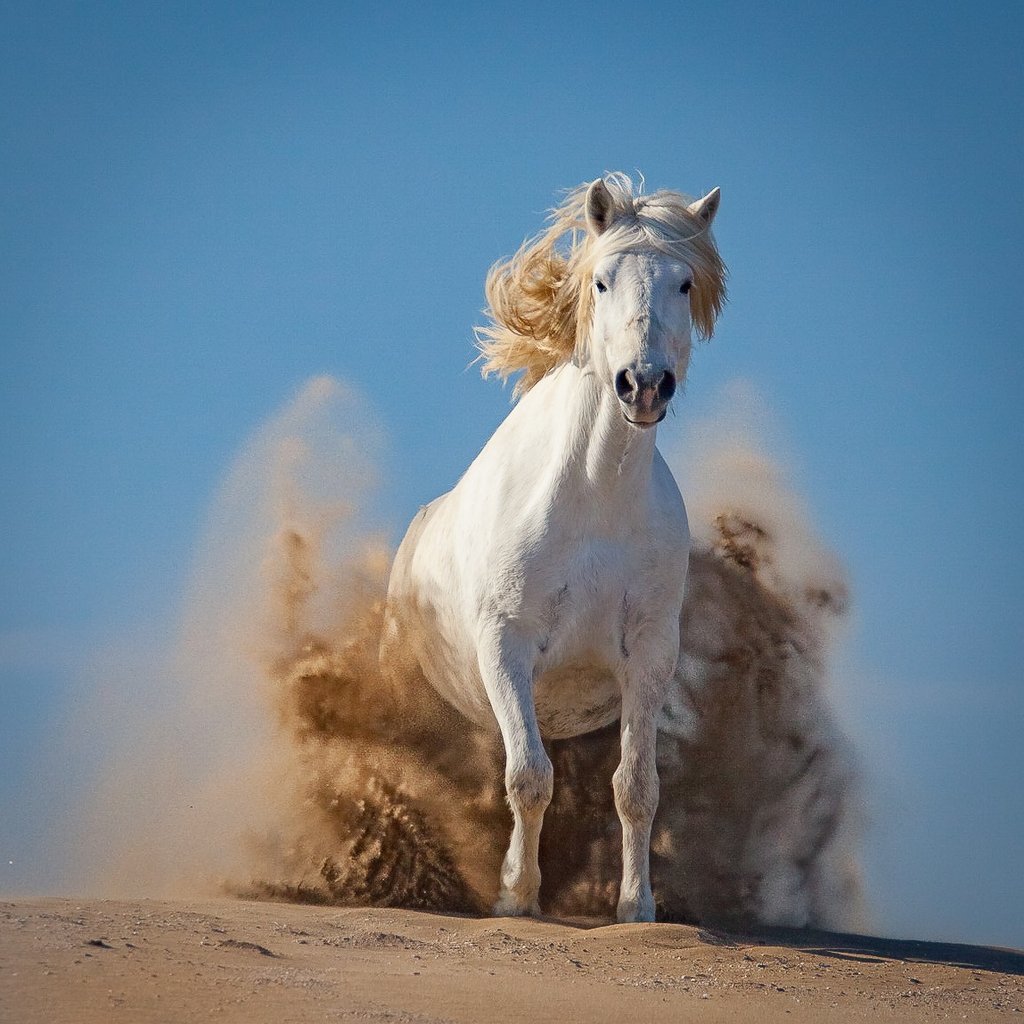
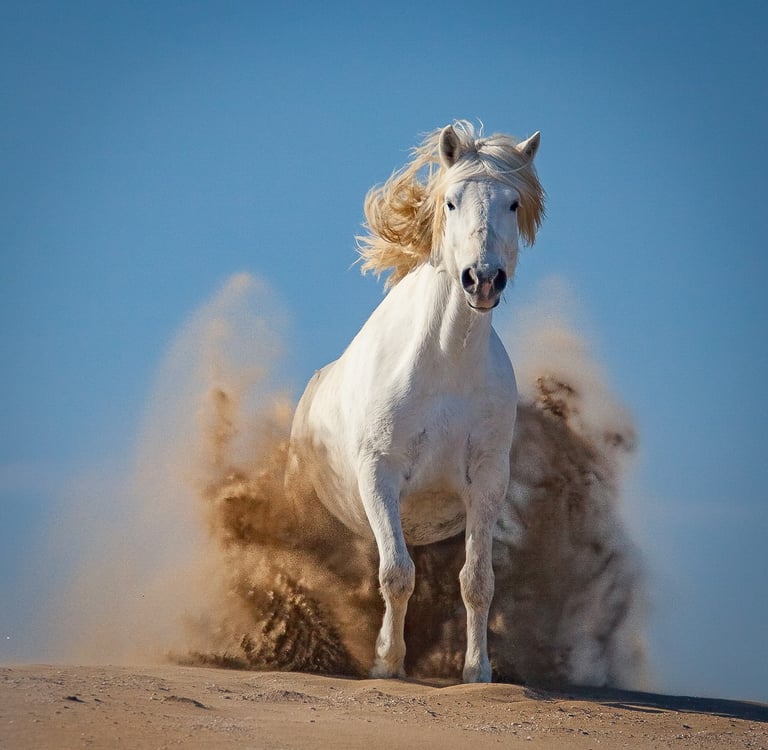
👕 Dress for Wet Conditions
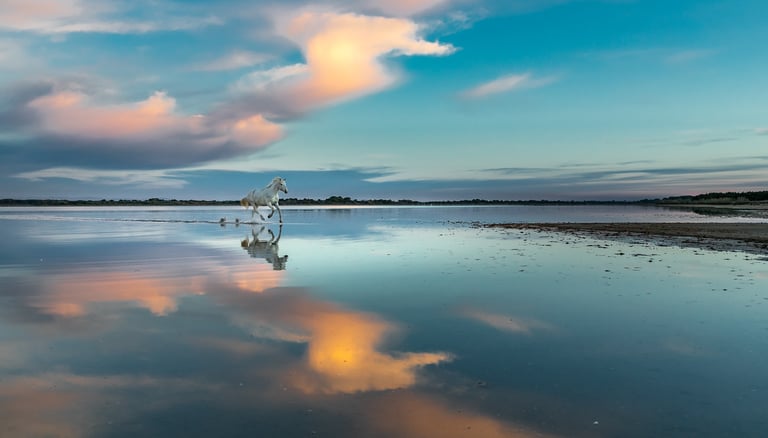
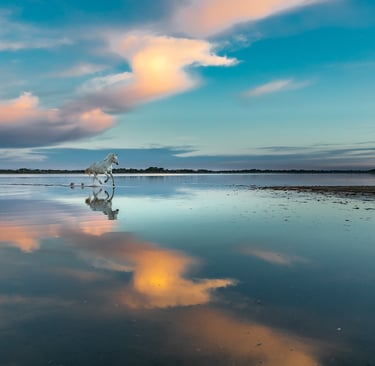
Many first-time visitors imagine photographing the White Horses of the Camargue from the comfort of a dry path or a viewing platform. The reality can be very different. To capture the most spectacular images, you'll often find yourself standing on wet sand, walking through shallow water or waiting patiently in the marshes before sunrise. Dressing appropriately is essential, not only for your comfort, but also for your ability to stay focused on photography.
A good pair of waterproof boots, or even better, a pair of waders, is one of the most important items you can bring. Whether you're walking along the beach, crossing flooded tracks or standing at the water's edge as the horses charge towards you, dry feet will make a huge difference during long photography sessions. Choose boots that provide good grip, as muddy ground and slippery rocks can become challenging after rain.
Your clothing should be based on layers rather than a single thick jacket. Mornings in the Camargue can be surprisingly cold, especially in autumn and winter, while temperatures often rise quickly after sunrise. A breathable base layer, a warm fleece and a lightweight waterproof jacket will keep you comfortable throughout the session without restricting your movements.
Don't underestimate the influence of the wind. Even on sunny days, a strong sea breeze can make the early morning feel much colder than the thermometer suggests. A windproof jacket, a warm hat and lightweight gloves can make those first hours far more enjoyable, especially if you're waiting for the perfect light.
Finally, expect to get wet. Water splashes are part of the experience when photographing horses running through the surf. A small waterproof towel, a change of socks and even a spare set of trousers left in your car can be a welcome luxury after an unforgettable morning in the field.
The more comfortable you are, the longer you'll be willing to stay outside, and that's often when the most beautiful light appears.
Photographer's Tip : I always tell participants to dress for conditions that are slightly worse than the forecast. It's much easier to remove a layer when the sun comes up than to enjoy a sunrise photo session when you're cold, wet and distracted.
To ensure you don't forget anything while you prepare your things to come to the Camargue, read our article: "The Ultimate Camargue Photography Packing List".
Quick Checklist
✔ Waterproof boots or waders with good grip.
✔ Layered clothing for changing temperatures.
✔ Windproof and waterproof jacket.
✔ Warm hat and lightweight gloves for early mornings.
✔ Spare socks and a dry change of clothes.

🐴 Understand Horse Behavior
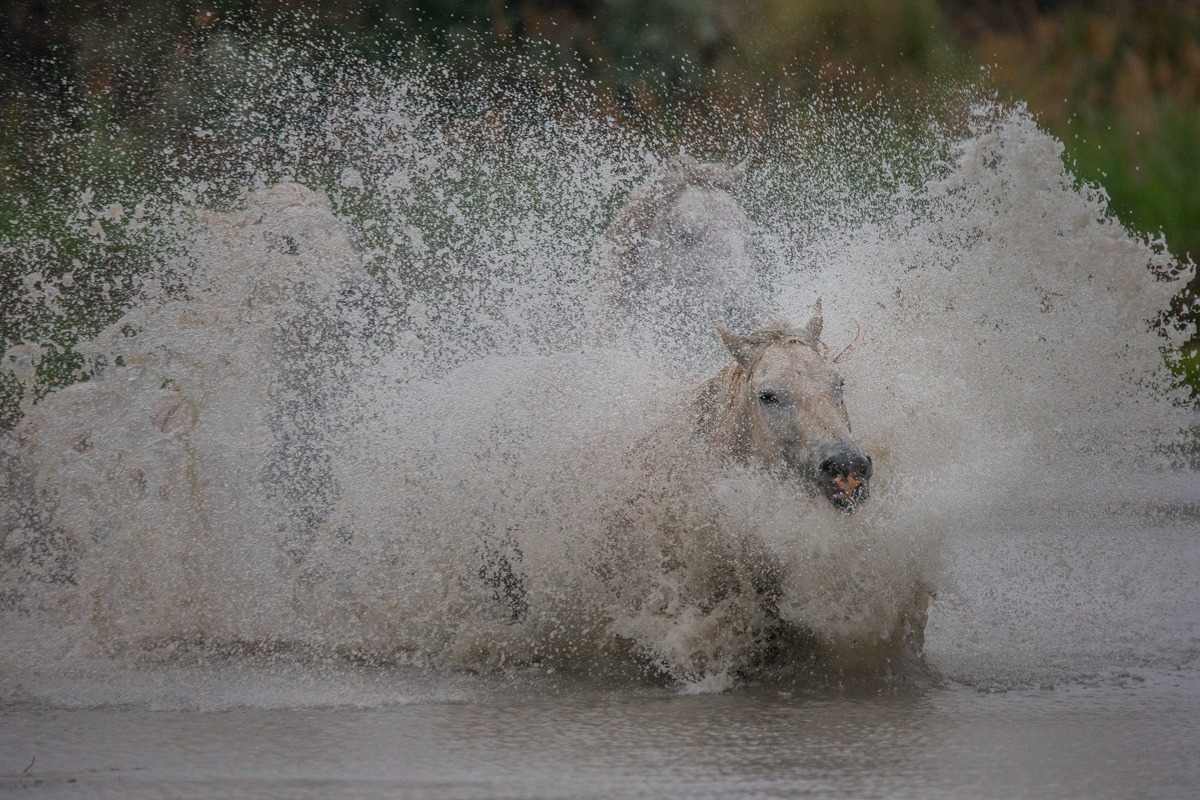
The most spectacular photographs are rarely the result of luck. More often, they come from understanding the horses and anticipating what they are about to do. Learning to read their behaviour will not only help you capture stronger images, but also allow you to work more safely and respectfully around these magnificent animals.
When photographing the White Horses of the Camargue, avoid focusing on a single horse. Instead, observe the entire herd. Small changes in posture, the position of the ears or the direction of their gaze often reveal what will happen next. A lead horse becoming more alert, a sudden shift within the group or increasing energy can all signal that the herd is about to move. Being ready a few seconds before the action begins often makes the difference between an average photograph and an unforgettable one.
Another common mistake is to concentrate only on the gallop. While dramatic action shots are iconic, some of the most powerful images happen during quieter moments. A curious horse looking directly into the camera, two horses interacting peacefully or a mare guiding her foal through the marshes can tell a much richer and more emotional story than a simple burst of speed.
During my workshops, I often notice that photographers instinctively lower their cameras as soon as the horses slow down. Ironically, that's frequently when the best opportunities appear. Expressions become softer, the light is more flattering and the scene feels more intimate. Patience almost always rewards the photographer who keeps observing.
Photographer's Tip: Don't just watch the horse you're photographing, watch the entire herd. The group's behavior often tells you what's about to happen, giving you precious seconds to compose your image before the action unfolds.
Quick Checklist
✔ Observe the whole herd, not just one horse.
✔ Learn to anticipate movement rather than react to it.
✔ Don't stop shooting when the action slows down.
✔ Capture quiet moments as well as dramatic gallops.
✔ Always respect the horses and let them behave naturally.

🙏 Respect the Horses, the Environment and Safety Rules
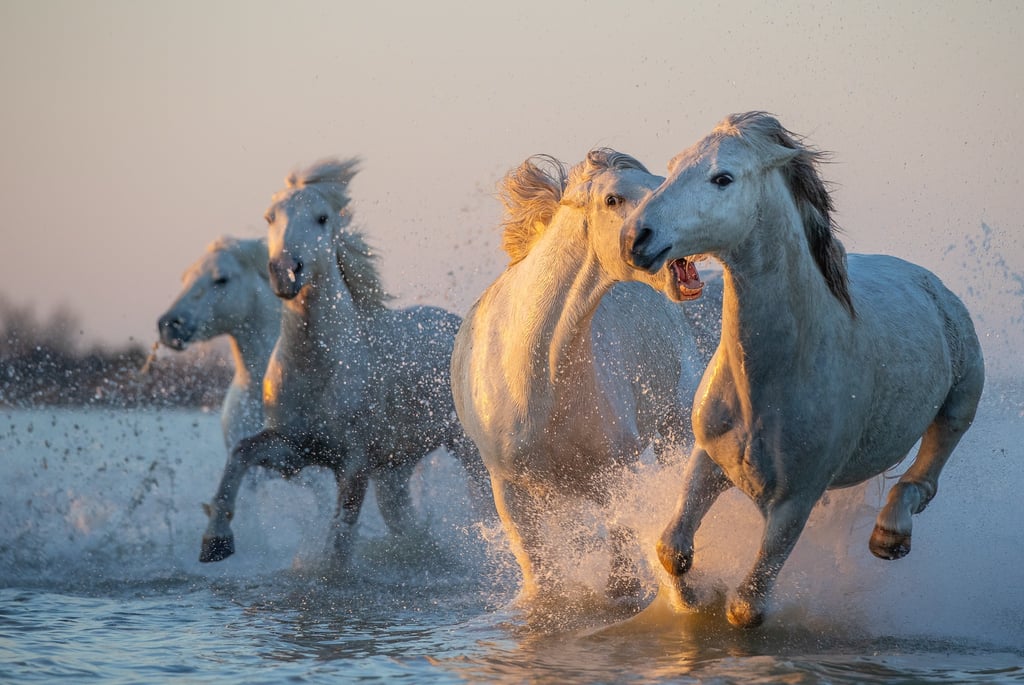
One of the reasons photographers can capture such spectacular images in the Camargue is thanks to the close collaboration with experienced local Gardians and their horses. These horses are not wild; they are carefully guided and generally accustomed to working with photographers during photo shoots. However, this should under no circumstances be interpreted as an invitation to disregard basic rules of respect and safety.
The welfare of the horses always comes first. Photography sessions should never push the animals beyond their limits. Professional Gardians carefully manage the pace of each session, giving the horses regular breaks, access to water and time to recover between runs. As photographers, our responsibility is to respect this rhythm and understand that the best images are created through patience, not by asking for "just one more run."
It's equally important to remember that a Camargue horse weighs around 500 kilograms (1,100 pounds). Even the calmest horse remains a powerful animal capable of changing direction in a fraction of a second. For this reason, photographers should always follow the instructions given by the Gardians and workshop leader, stay in designated positions and never move unexpectedly into the horses' path. A beautiful photograph is never worth compromising anyone's safety.
Respect also extends to the remarkable natural environment of the Camargue. The marshes, beaches and dunes are fragile ecosystems that support an incredible diversity of wildlife. Stay on established access routes whenever possible, avoid leaving litter behind and take care not to disturb nesting birds or sensitive vegetation while searching for the perfect composition.
The most rewarding photography experiences are those where everyone works together, the horses, the Gardians, the photographers and the landscape itself. By respecting each of these elements, you'll not only return home with stronger images, but also help preserve the unique spirit of the Camargue for future generations.
Photographer's Tip: The best workshops are never about asking the horses to do more. They're about making the most of every run, anticipating the action and creating exceptional photographs while respecting both the animals and the people who work with them every day.
Quick Checklist
✔ Respect the horses and allow them regular rest periods.
✔ Always follow the Gardians' and workshop leader's instructions.
✔ Never stand in the horses' path or move unexpectedly.
✔ Protect the fragile landscapes of the Camargue.
✔ Remember: safety and animal welfare always come before the photograph.
🌅 Be Ready Before Sunrise
If there's one piece of advice that can transform your photography in the Camargue, it's this : be in position well before sunrise.
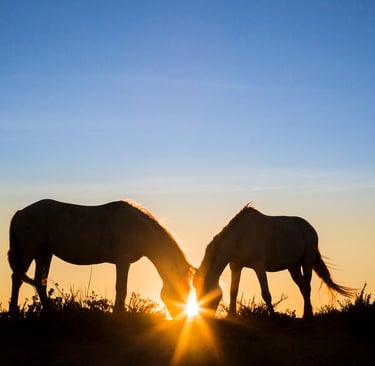
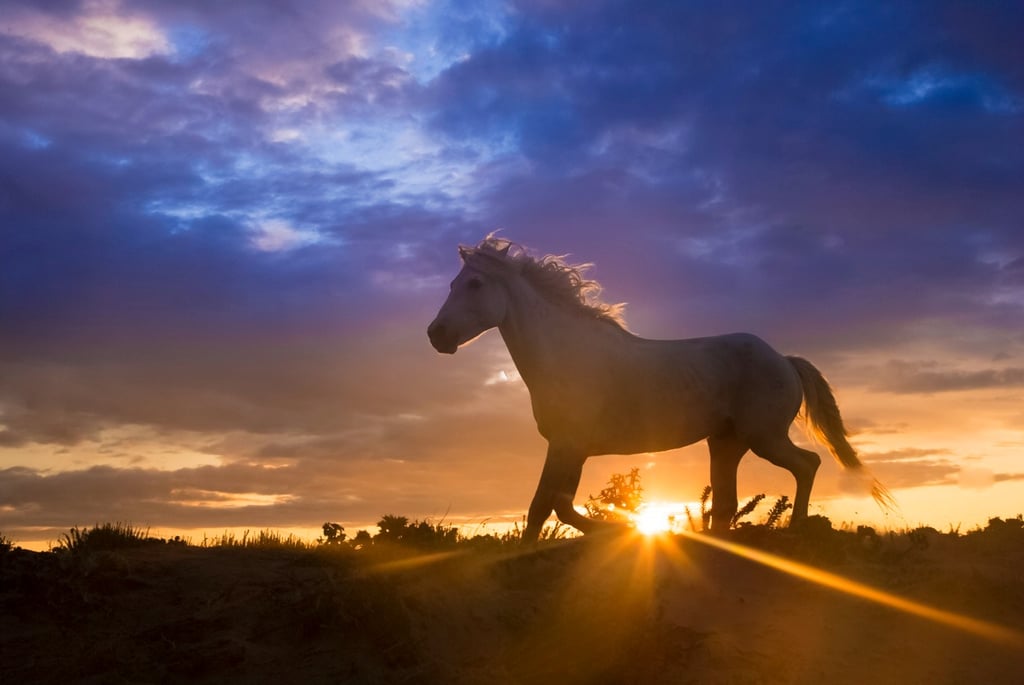
The most magical light of the day lasts only a few minutes. Before the sun appears above the horizon, the landscape is bathed in soft blue tones, reflections become perfectly smooth and the first warm colors begin to illuminate the sky. As daylight slowly grows, the White Horses of the Camargue are revealed in beautiful golden light, creating the iconic images that have inspired photographers from around the world.
Many beginners make the mistake of arriving just as the sun is rising. By then, the best colors may already be fading and the photography session has often begun. Professional photographers know that preparation starts much earlier. Cameras should be ready, settings checked and compositions imagined while the landscape is still in darkness.
The first rays of sunlight also produce a softer contrast, allowing the white coats of the horses to retain their delicate details without becoming overexposed. As the sun climbs higher, the light quickly becomes harsher, shadows deepen and photographing white subjects becomes far more challenging.
Another advantage of arriving early is that you have time to absorb the atmosphere. The silence of the marshes, the sound of birds waking up and the first movements of the horses all help you anticipate the action before it unfolds. Photography is not only about reacting, it's about being ready before the decisive moment arrives.
In the Camargue, sunrise isn't simply the start of the day. For photographers, it's often the most rewarding and inspiring moment of the entire experience.
Photographer's Tip : I always recommend arriving at least 30 to 45 minutes before sunrise. Those quiet moments allow you to prepare your equipment, observe the changing light and be completely ready when the horses begin to move.
Quick Checklist
✔ Arrive at least 30–45 minutes before sunrise.
✔ Prepare your camera settings before the action begins.
✔ Take advantage of the soft pre-dawn colours.
✔ Photograph during the first golden light for the best results.
✔ Stay after sunrise—the changing light offers different creative opportunities.

🌊 Don't Forget the Landscape
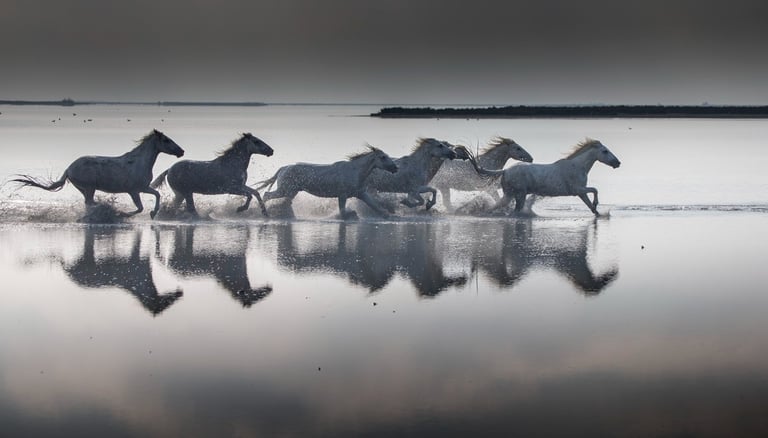
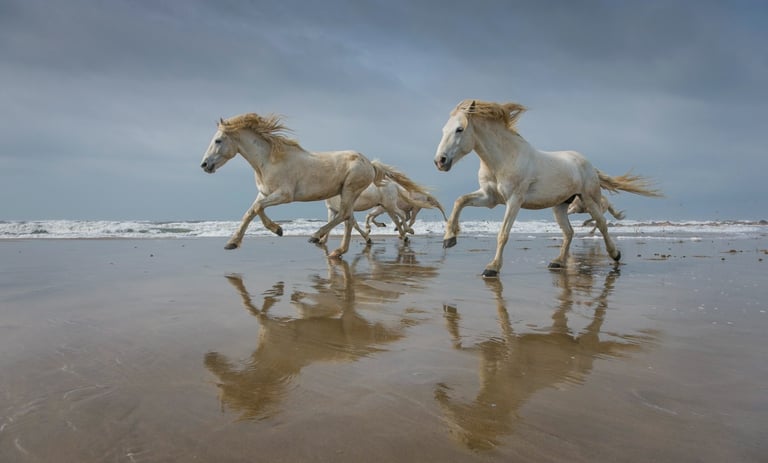
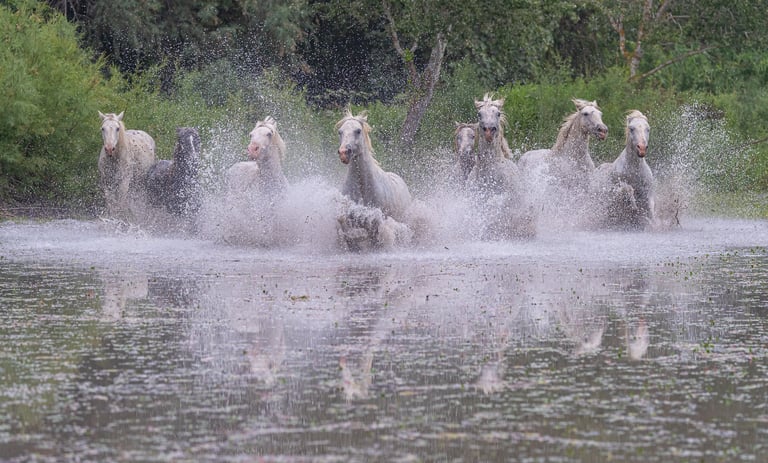
When photographers dream about the Camargue, they often imagine the iconic image of white horses running through shallow water. While these moments are truly spectacular, the horses are only one part of a much larger story. The real magic of Camargue photography comes from showing the connection between the animals and the extraordinary landscape they call home.
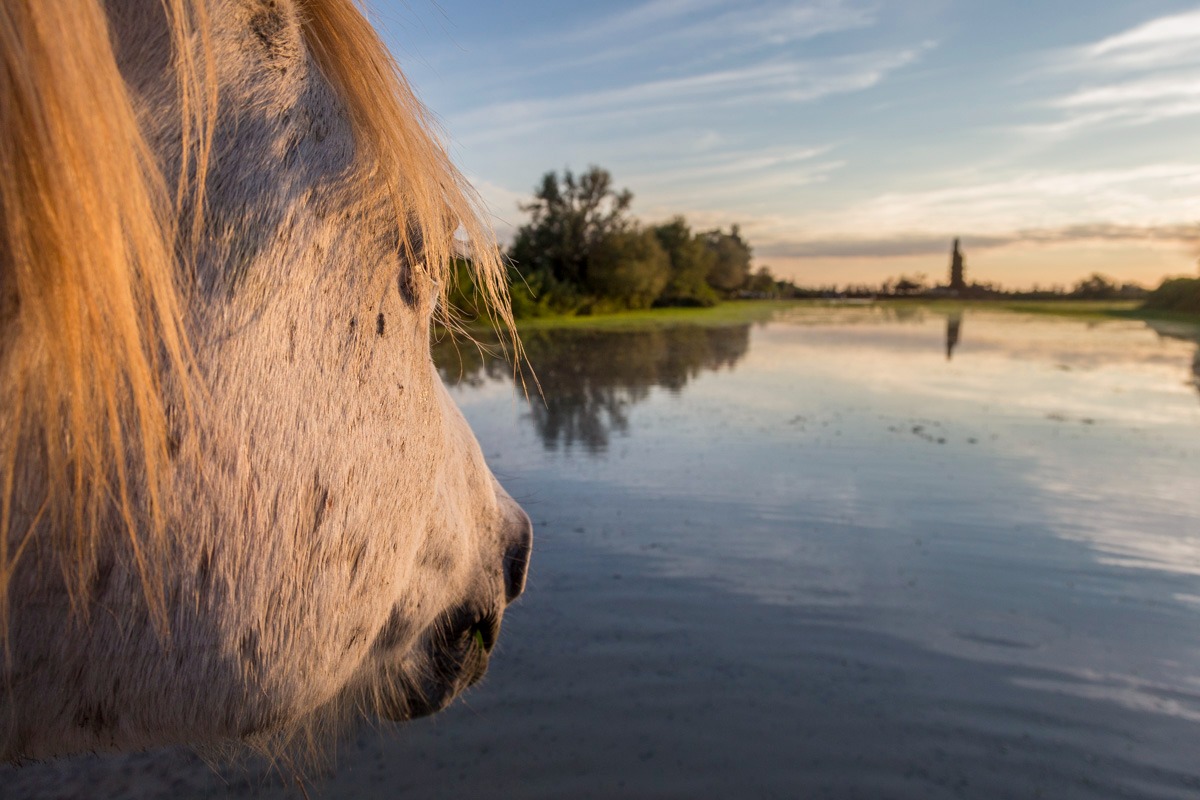
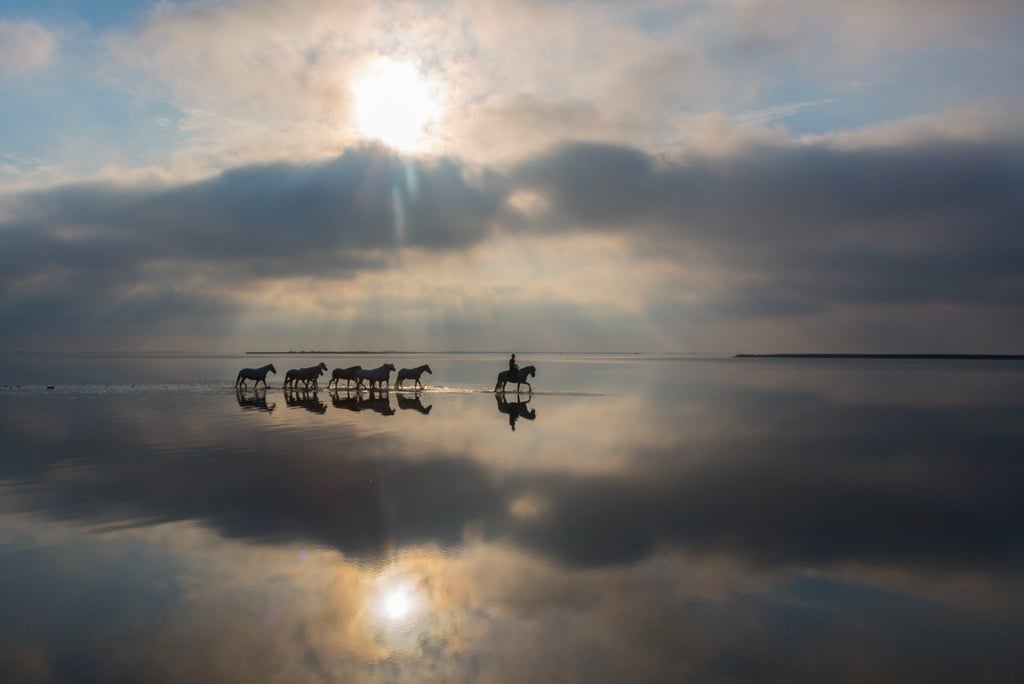
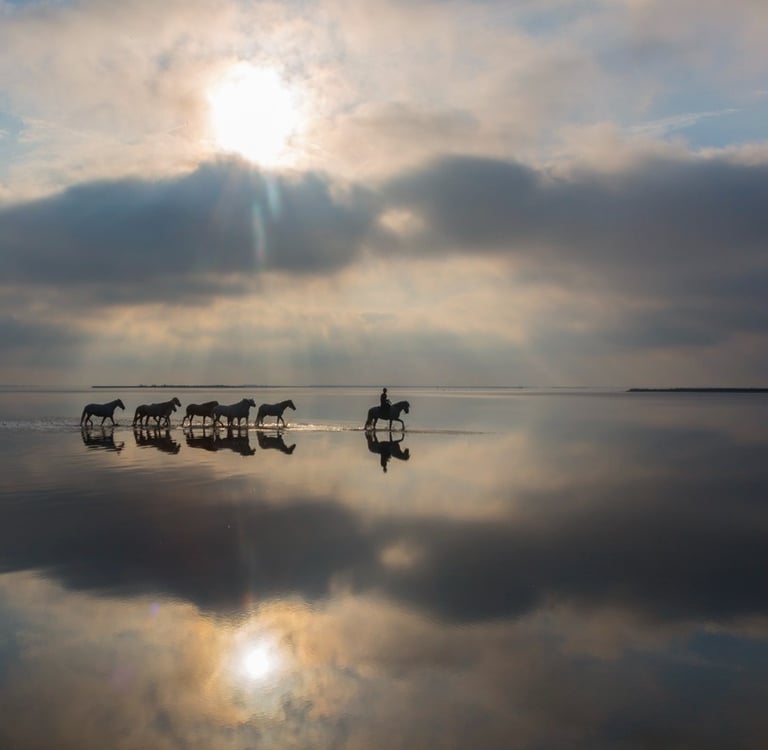
The marshes and wetlands are the heart of the Camargue. Their endless horizons, changing colors and peaceful atmosphere create the perfect setting for powerful images. Instead of always filling the frame with the horses, try stepping back and including the environment around them. A small group of white horses surrounded by vast wetlands can often create a much stronger sense of place and emotion.
The tall reed beds are another iconic element of the landscape. Their delicate shapes, moving with the wind, add texture and depth to your compositions. They can be used as natural frames, leading lines or foreground elements to create more sophisticated images.
The Camargue is also famous for its incredible birdlife, especially its large population of pink flamingos. Combining horses, birds and wetlands in the same visual story allows you to capture the unique biodiversity of this region. The Camargue is not just a place to photograph horses—it is one of Europe's most fascinating natural environments.
Never underestimate the importance of the sky. Dramatic cloud formations, especially before or after a weather change, can transform a simple scene into a powerful photograph. The wide open landscapes of the Camargue give clouds a major role in the composition, adding atmosphere, scale and emotion.
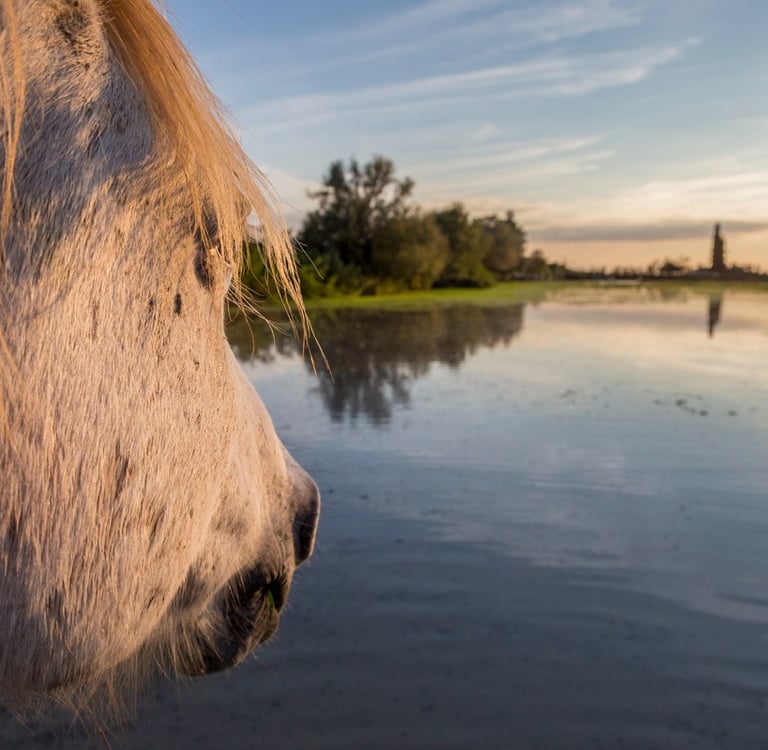
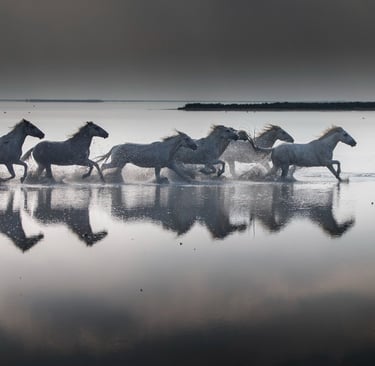
Finally, pay attention to reflections. The calm waters of the marshes and shallow coastal areas often create beautiful mirror effects, doubling the impact of the horses, the sky and the surrounding colours. A few minutes of still water can turn an already beautiful scene into something truly memorable.
The best Camargue photographs are not only about capturing a horse. They are about telling the story of a unique place where wildlife, water, light and tradition come together.
Photographer's Tip: Try making a series of images where the horse is not always the largest element in the frame. Sometimes the landscape tells the story better than a close-up.
Quick Checklist
✔ Include the environment, not only the horses.
✔ Use marshes and reeds to add depth to your compositions.
✔ Look for opportunities with flamingos and other wildlife.
✔ Pay attention to dramatic skies and changing weather.
✔ Use reflections to create more artistic images.


☔️ Protect Your Equipment
The Camargue is a photographer's paradise, but it can also be a challenging environment for your camera equipment. Between sea spray, wind-blown sand, morning humidity and constantly changing weather conditions, your gear needs proper protection if you want it to perform reliably throughout your journey.
Sand is one of the biggest threats when photographing on the beaches and dunes of the Camargue. Tiny particles can easily find their way into camera bodies, lenses and moving parts, especially on windy days. Avoid changing lenses whenever possible in exposed areas, and try to protect your equipment when you are not shooting. A good camera bag with weather protection is essential.
The influence of saltwater should never be underestimated. Even when you are not directly next to the sea, fine salty droplets carried by the wind can settle on your lenses and equipment. These deposits can affect image quality and, over time, damage sensitive components. Always carry a microfiber cloth and clean your lenses regularly during long sessions.
Water and humidity are also part of the Camargue experience. Early morning photography often means working near marshes, shallow water and wet vegetation. Condensation can appear when moving between cold outdoor temperatures and warmer indoor environments. Allow your equipment to gradually adapt to temperature changes and consider using sealed bags when moving between different conditions.
A simple waterproof cover can also be extremely useful. Weather in the Camargue can change quickly, and an unexpected shower or wave splash should not force you to end a once-in-a-lifetime photography opportunity.
Finally, remember that protecting your equipment allows you to stay focused on what really matters : creating images. The less you worry about your gear, the more attention you can give to the horses, the light and the decisive moment.
Photographer's Tip: After every photography session near the sea or wetlands, I recommend taking a few minutes to check your equipment. Wipe away any moisture or salt residue before packing your gear away. This simple habit can significantly extend the life of your cameras and lenses.
Quick Checklist
✔ Avoid changing lenses in windy or sandy conditions.
✔ Keep a microfiber cloth and lens cleaning kit with you.
✔ Protect your camera bag from moisture and sand.
✔ Use waterproof covers during uncertain weather.
✔ Clean your equipment after sessions near the sea or marshes.
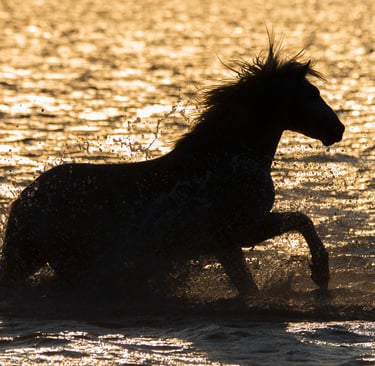
Join a Local Photography Workshop


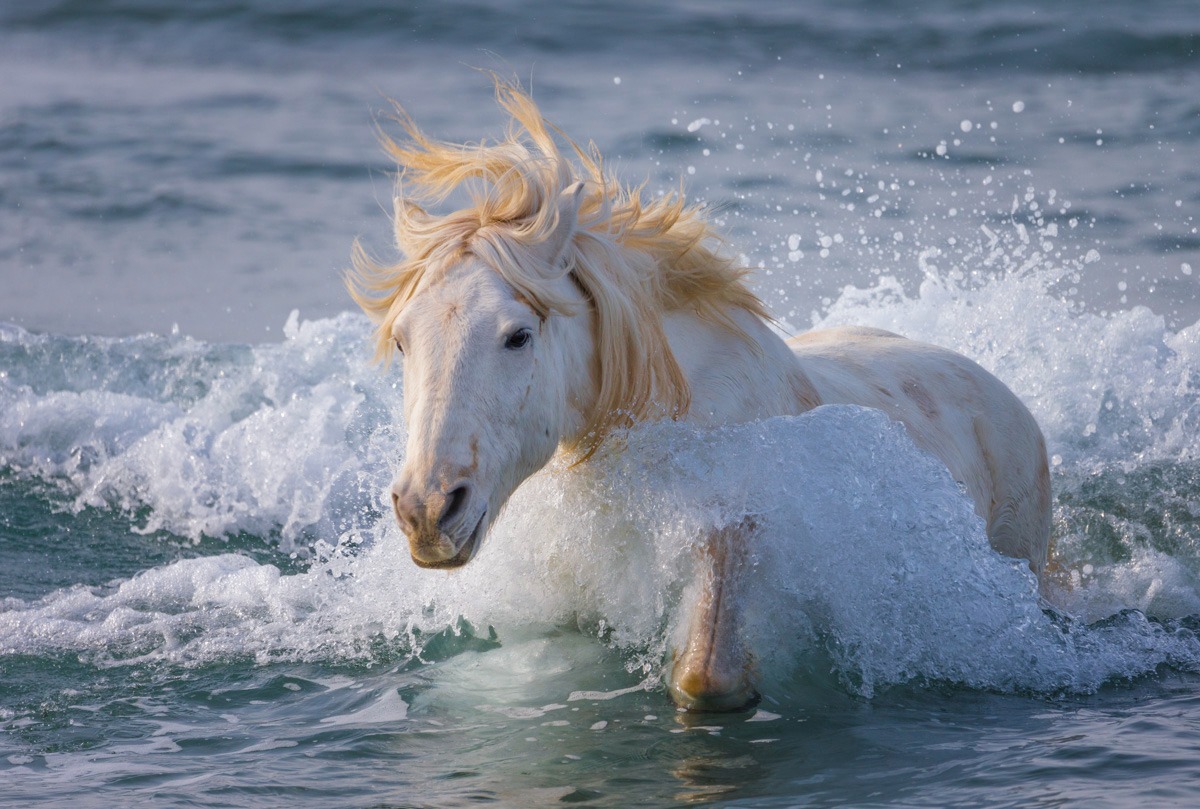
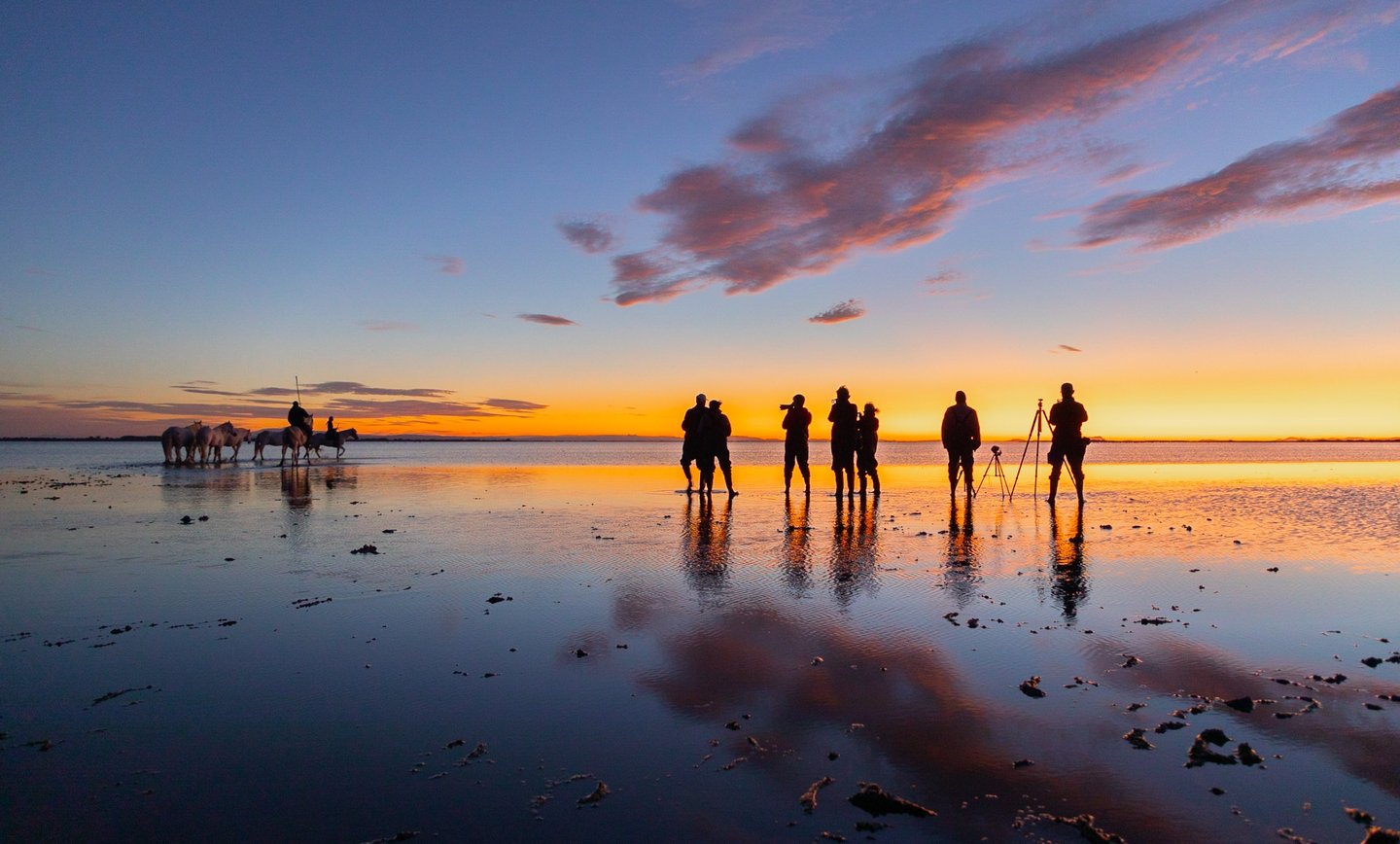
The Camargue is a vast and fascinating region, but it is not always easy to photograph. The best locations are often hidden away, the most beautiful light appears for only a few minutes, and the behaviour of the horses depends on many factors that are difficult to understand during a first visit.
Working with a local photographer or joining a dedicated photography workshop can save you valuable time and help you focus on what really matters : creating exceptional images.
A local guide knows the places where the light is most beautiful, the areas where the horses can be photographed in the best conditions and the moments when the landscape reveals its full magic. Years of experience in the field make it possible to anticipate changing weather, seasonal variations and the unique atmosphere of each location.
Another important advantage is the connection with local professionals. The relationship between photographers and Gardians is essential to creating respectful and authentic photography experiences. Understanding how to work with the horses, where to position yourself and how to prepare for each sequence allows photographers to capture powerful images while respecting both the animals and the people who care for them.
Most importantly, a local workshop allows you to spend less time searching and more time photographing. Instead of worrying about logistics, access points or timing, you can concentrate on composition, light and storytelling.
Whether you are visiting the Camargue for the first time or returning to improve your photography, local knowledge can transform your experience and help you discover a deeper connection with this extraordinary landscape.
Feel free to check out our article "What photography gear should you bring for a photography workshop in the Camargue" if you want to know more about what will, or won't, be useful for a photography trip focused on Camargue horses.
At Pixterra Journeys, our Camargue photography experiences are designed around this philosophy : combining local expertise, exceptional locations, respectful encounters with the horses and the best possible photographic conditions to create unforgettable memories and images.
Photographer's Tip: The best photograph is not always found by walking the furthest distance. Sometimes it comes from knowing exactly where to stand, when to wait and how to let the landscape reveal itself.
Quick Checklist
✔ Learn from someone who knows the region.
✔ Save time by accessing the best photographic locations.
✔ Understand the behaviour of horses and the rhythm of the sessions.
✔ Benefit from local knowledge of light and weather conditions.
✔ Focus on creating images rather than managing logistics.
Conclusion
Photographing the White Horses of the Camargue is much more than capturing a beautiful animal in a beautiful landscape. It is about experiencing a unique place where wild landscapes, traditional heritage, incredible light and the rhythm of nature come together.
The most memorable images are rarely created by chance. They come from preparation, patience and a deep understanding of the environment. Choosing the right season, bringing the right equipment, anticipating the horses' behaviour and learning to work with the changing light will allow you to create photographs that truly reflect the spirit of the Camargue.
But beyond the technical aspects, successful photography in the Camargue is also about connection. Connection with the landscape, with the horses, with the local traditions and with the people who have protected this unique territory for generations. Taking the time to observe, listen and understand your surroundings will always lead to more authentic and meaningful images.
The Camargue rewards photographers who are willing to slow down and embrace the experience. A quiet sunrise over the marshes, the sound of horses moving through shallow water, the reflection of a dramatic sky or a moment shared with a Gardian are memories that remain long after the camera is packed away.
Whether you are an experienced photographer looking to expand your portfolio or someone dreaming of capturing your first images of these legendary white horses, careful preparation and local knowledge can completely transform your journey.
The Camargue is waiting. The light is ready. The horses are waiting for the next unforgettable moment.
Ready to photograph one of Europe's most spectacular wildlife destinations ?
Join us for a premium Camargue Photography Workshop and discover the best locations, the most beautiful light and the authentic spirit of this extraordinary region alongside a local photographer who knows every corner of this unique landscape.
PixterraJourneys
Field-craft and photo storytelling in Southern France.
Join us
contact@pixterra.fr
Gignac la Nerthe, Provence, France
Booking open for Autumn, Spring & Summer
© 2026 PixterraJourneys - Selected regional access options for passionate photographers.
Provence & Camargue