Camargue horses, endless lavender fields, timeless villages - Explore the South of France through your lens.
The Ultimate Guide to Photographing the White Horses of the Camargue
Camera settings, light, seasons, equipment, horse behavior and ethical field techniques for photographing the white horses of the Camargue.
Written and photographed by Patrice Aguilar - Provence and Camargue photographer since 1994
Summary
The White Horses of the Camargue : History, Habitat and Heritage
The Unique Genetics - Why Camargue Horses Look White : The Grey-Coat Transformation
Built for the Wetlands : How Camargue Horses Adapt to Their Environment
From Gardian Traditions to a Photographic Icon
Why the Camargue Is Exceptional for Horse and Wildlife Photography
When Is the Best Time to Photograph Camargue Horses
Reading Camargue Horse Behavior for Safer, More Authentic Photography
What Photography Gear Do You Need for Camargue Horses
Put Your Knowledge Into Practice : Join a Camargue Horse Photo Workshop
Frequently Asked Questions about photographing Camargue Horses
Few places in Europe offer a photographic experience as unique as the Camargue, where white horses, endless wetlands and Mediterranean light create one of France's most iconic landscapes.
Everything you need to know about photographing one of the world's most iconic horse breeds in the south of France
Best locations, camera settings, light, behavior, ethics and exclusive field experience.

Before sunrise, nature begins to awaken. The only sounds are the songs of birds echoing across the pond.
A delicate mist drifts over the water as we wait in silence for a truly unforgettable spectacle.
Then, somewhere in the distance, we hear it.
The sound of hooves.
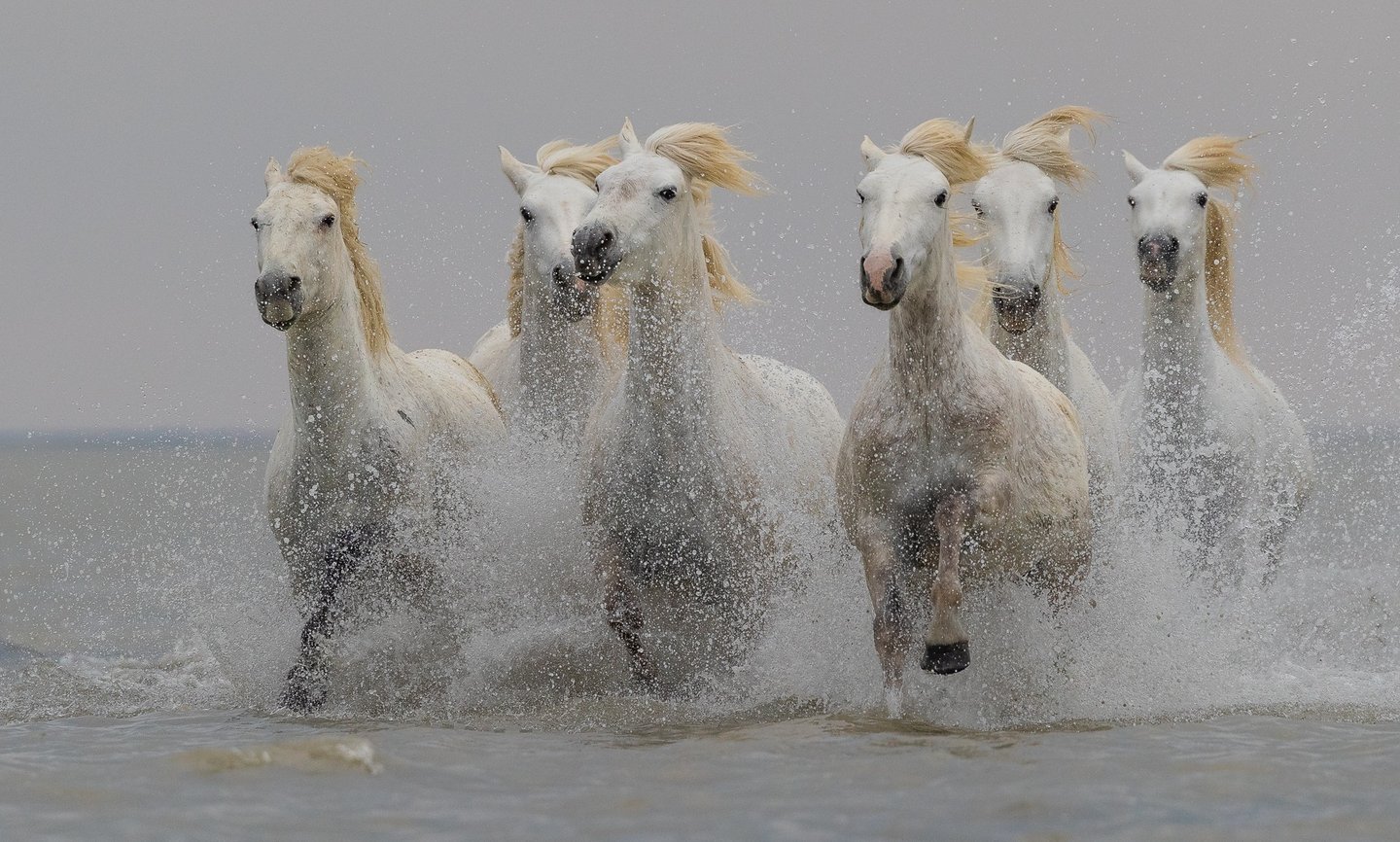
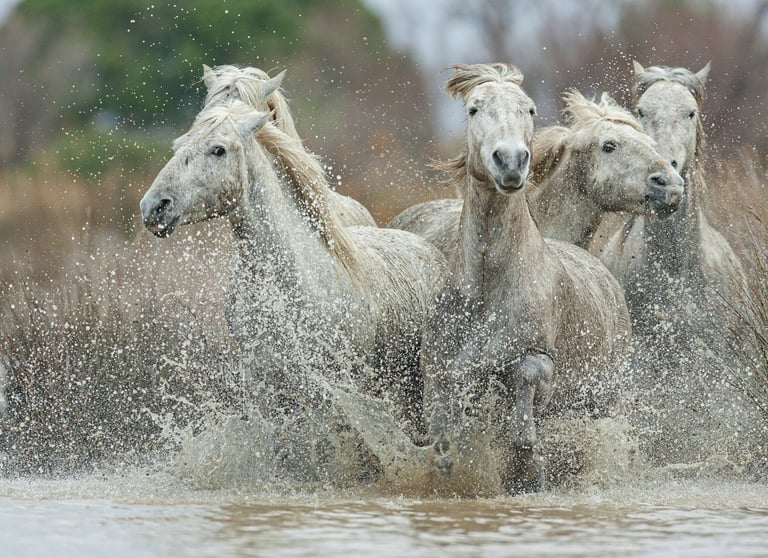
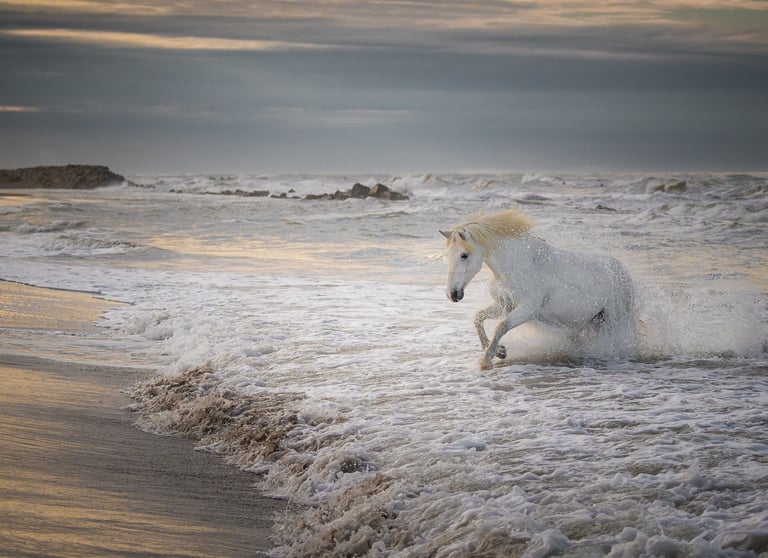
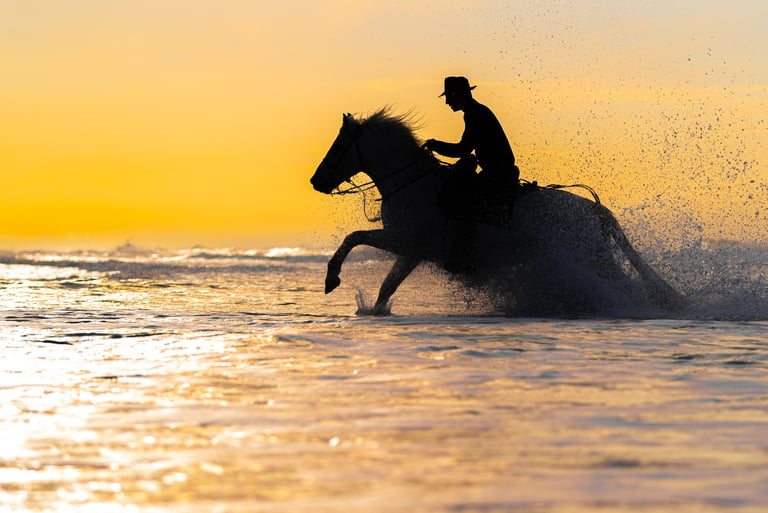
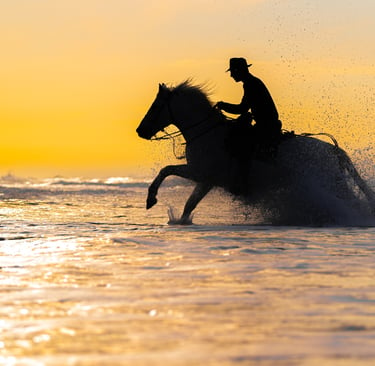
Moments later, a herd of magnificent white horses bursts through the water, illuminated by the first golden rays of dawn. Water explodes beneath their powerful strides as the rising sun paints the landscape in warm, golden light.
This is more than horse photography, more than a simple Camargue horse photo workshop.
It is one of Europe's most breathtaking wildlife photography experiences, an encounter with the untamed spirit of the Camargue that few photographers will ever forget.
The White Horses of the Camargue : History, Habitat and Heritage
Few animals are as closely connected to their landscape as the white horses of the Camargue. For centuries, they have lived among the lagoons, salt marshes, reed beds and beaches of the Rhône Delta, adapting to strong winds, summer heat, insects and waterlogged terrain.
Hardy, agile and remarkably resilient, Camargue horses live outdoors for much of the year in herds known as manades, traditionally managed by the gardians of southern France. Their presence is inseparable from the region’s identity, landscapes and livestock traditions.
Despite their famous appearance, Camargue horses are not born white. Foals usually have dark coats that progressively lighten as they mature, eventually giving adult horses their characteristic pale-grey appearance. Against the wetlands, sand and golden Mediterranean light, this distinctive coat makes them especially compelling photographic subjects.
For photographers, their appeal lies in the combination of movement, environment and tradition. A herd galloping through shallow water, a gardian riding across the marshes or a quiet portrait at sunrise can communicate both the power of the animal and the atmosphere of the Camargue.
To learn more about the origins of the breed, its distinctive coat, its adaptation to the wetlands and its relationship with the gardians, read our complete guide to the history and characteristics of the Camargue horse.
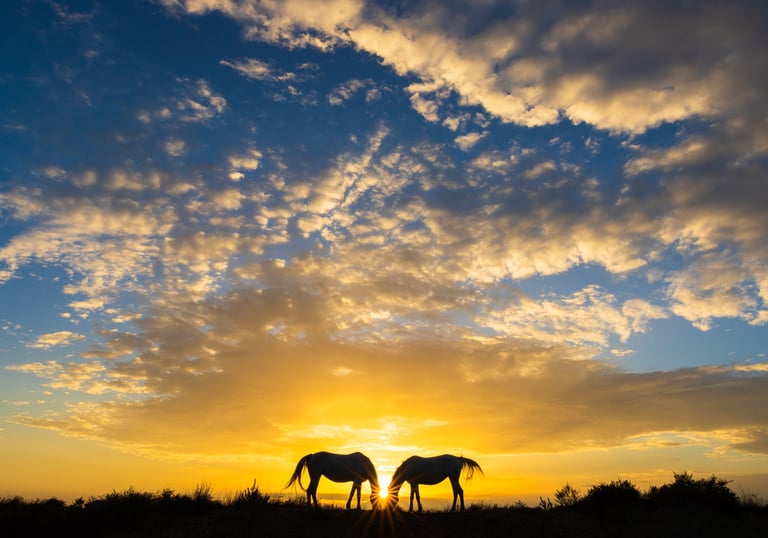
The Unique Genetics - Why Camargue Horses Look White : The Grey-Coat Transformation
Camargue horses are famous for their luminous white appearance, but they are not born that way. Foals usually have dark coats, black, bay or dark brown, that progressively become lighter as they mature.
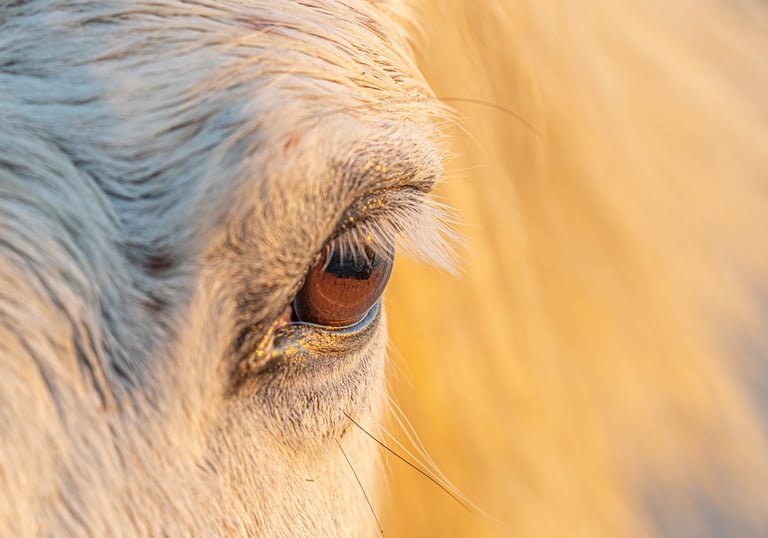
Although commonly described as white, adult Camargue horses are genetically grey. Their changing appearance is associated with the grey-coat trait, which gradually reduces pigmentation in newly grown hair while the skin remains dark. Over time, this process produces the pale coat that has become one of the breed’s most recognizable characteristics.
For photographers, this transformation creates very different subjects within the same herd. Dark foals provide striking contrast beside pale adult horses, while mature coats reflect the warm light of sunrise and sunset particularly well. However, these bright coats can also be challenging to expose correctly, especially against dark marshes or reflective water.
To explore the genetics, history and characteristics of the breed in greater depth, read our complete guide to the Camargue horse. For practical exposure advice, consult our best camera settings for photographing Camargue horses.
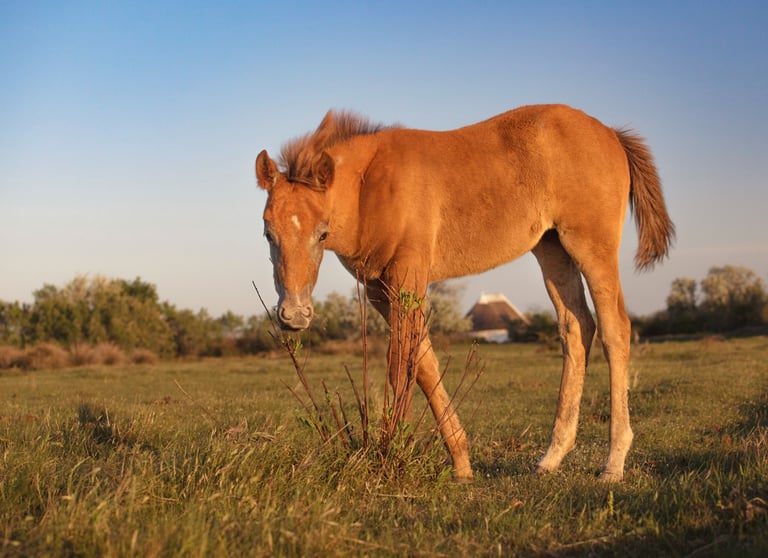


Built for the Wetlands : How Camargue Horses Adapt to Their Environment
The Camargue horse has been shaped by life in the wetlands of the Rhône Delta, an environment of shallow lagoons, muddy ground, salt marshes, strong winds and seasonal extremes. Its compact build, strong legs and robust hooves allow it to move confidently across terrain that can be difficult for both animals and photographers.
Living outdoors for much of the year in herds known as manades, these horses are renowned for their hardiness and endurance. Under the care of the Camargue gardians, they move between marshes, reed beds, pastures and coastal landscapes according to the season and local conditions.
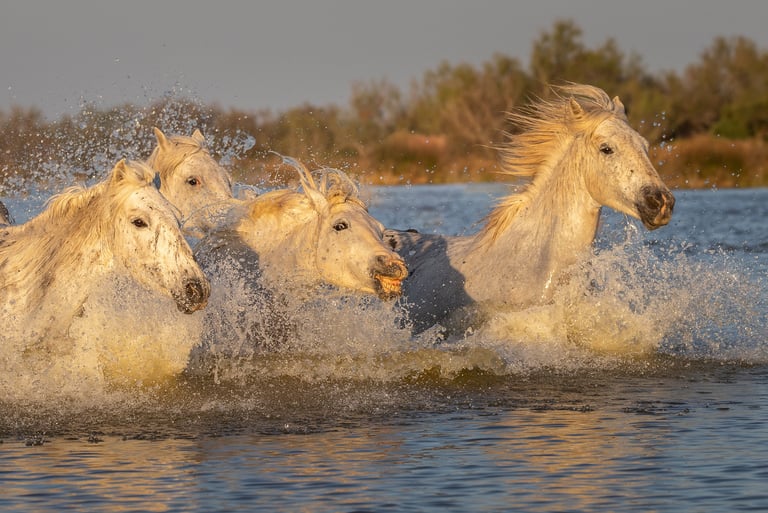
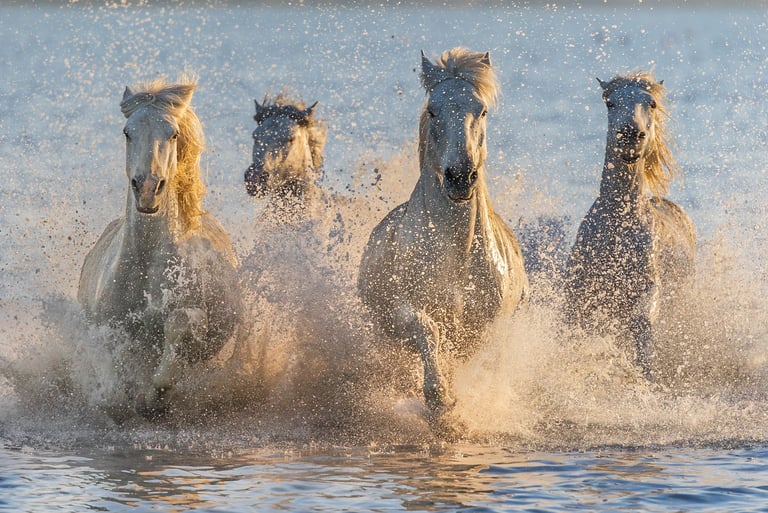
These characteristics also influence the photographic experience. Camargue horses can move rapidly through water and change direction within a herd, producing dramatic splashes, reflections and interactions. Their pale adult coats contrast strongly with dark wetlands, while younger horses may display much darker colouring. Understanding their environment and behaviour helps photographers anticipate movement, choose suitable backgrounds and work at a safe, respectful distance.
To explore their physical characteristics, diet, behaviour and adaptation to the Rhône Delta in greater depth, read our complete guide to the Camargue horse.

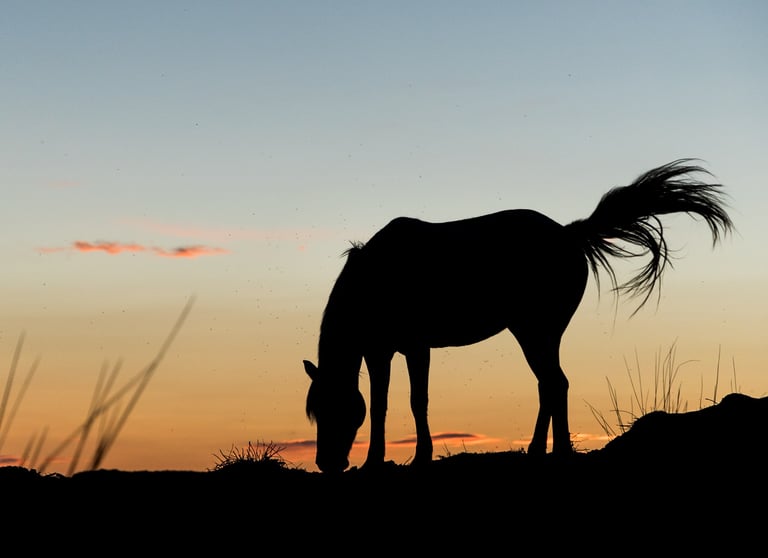

From Gardian Traditions to a Photographic Icon
The Camargue horse is far more than an emblematic breed. Its pale coat, strength and semi-wild way of life have made it a lasting symbol of freedom and resilience, deeply connected to the landscapes and cultural identity of southern France.
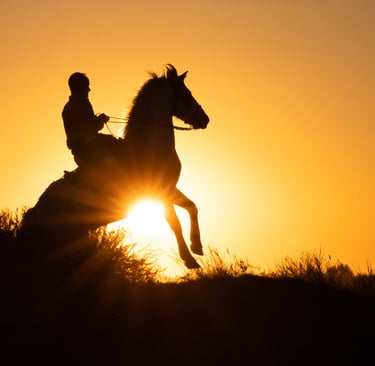
The horse is also inseparable from the gardians, the traditional horsemen of the Camargue. For generations, horses and riders have worked together to manage cattle across marshes, pastures and open wetlands. This relationship remains visible in local traditions and offers photographers a richer story than the image of a horse galloping through water alone.
The visual power of the Camargue horse has inspired filmmakers, painters, writers and photographers. Albert Lamorisse’s Crin-Blanc (White Mane) played an important role in establishing the image of the Camargue stallion as a symbol of untamed freedom. Today, the contrast between pale horses, dark marshes, reflective water and Mediterranean light continues to attract photographers from around the world.
Understanding this cultural context can improve photographic storytelling. Images of horses, gardians and working traditions should communicate both beauty and authenticity, without presenting every managed or organized scene as completely wild.
Discover more about the breed’s cultural heritage and the role of the gardians in our complete guide to the Camargue horse.



Why the Camargue Is Exceptional for Horse and Wildlife Photography
Located in the Rhône Delta in southern France, the Camargue brings together open wetlands, Mediterranean light, distinctive wildlife and centuries-old equestrian traditions. This combination makes it an exceptional destination for photographers interested in horses, birds, landscapes and visual storytelling.
Mediterranean Light and Reflective Wetlands
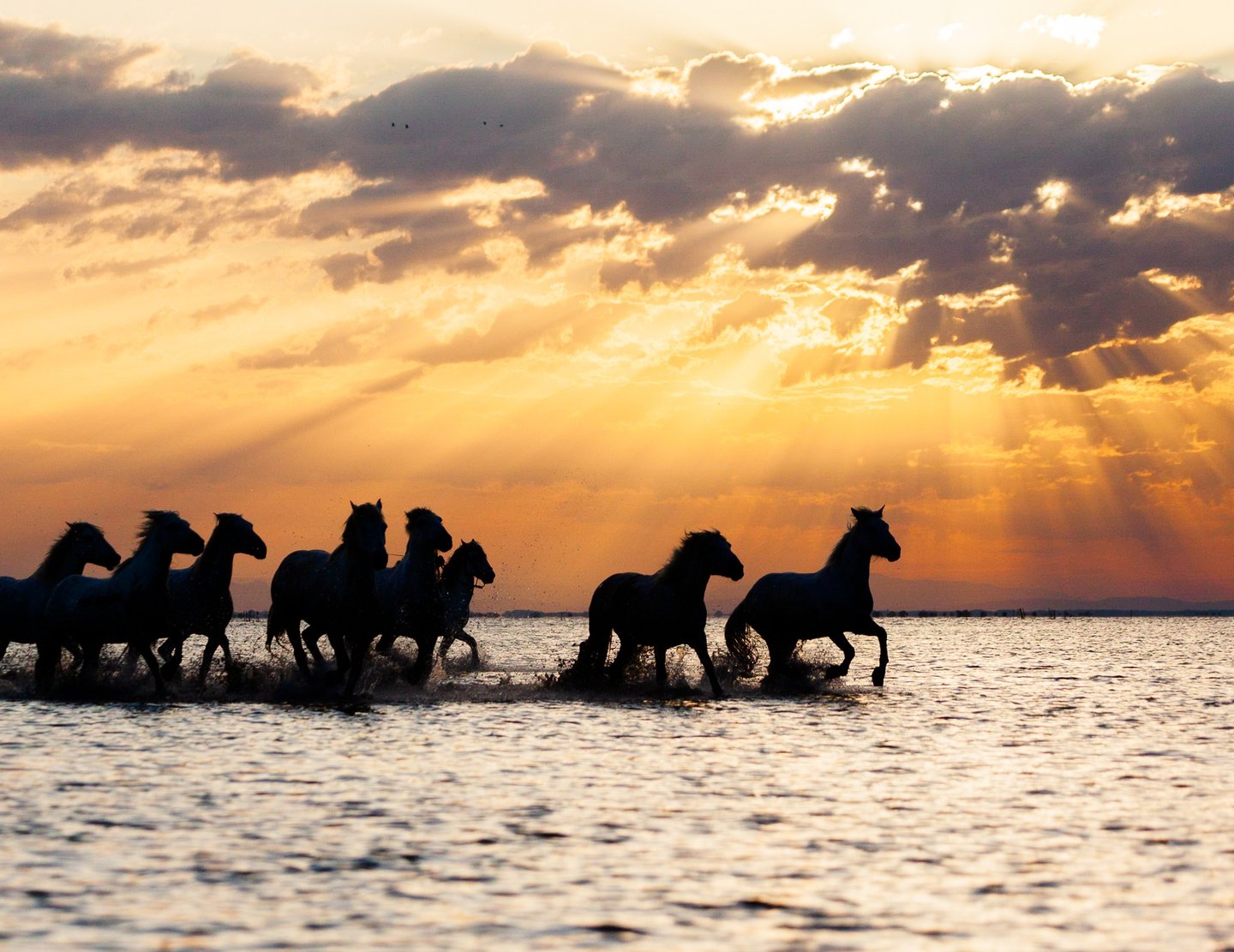
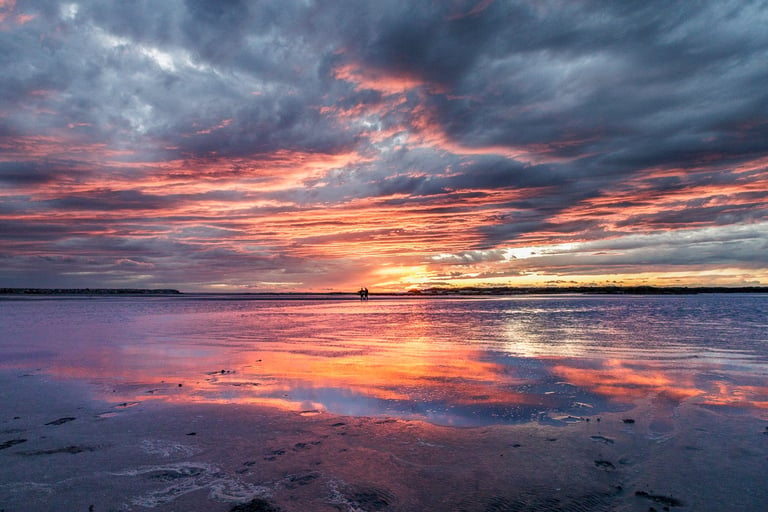
The region’s expansive skies and abundance of water create constantly changing photographic conditions. Around sunrise and sunset, warm directional light can illuminate the horses’ pale coats, reveal the texture of their manes and transform splashing water into luminous droplets. Reflections in shallow lagoons can also add symmetry and depth to a composition.
Overcast conditions offer a different advantage. Softer light reduces harsh contrast and can be particularly effective for portraits, behavioural scenes and close details. Because conditions vary considerably with the season, weather and water levels, consult our guide to the best time of year to photograph Camargue horses before planning your visit.
Marshes, Beaches and Dunes
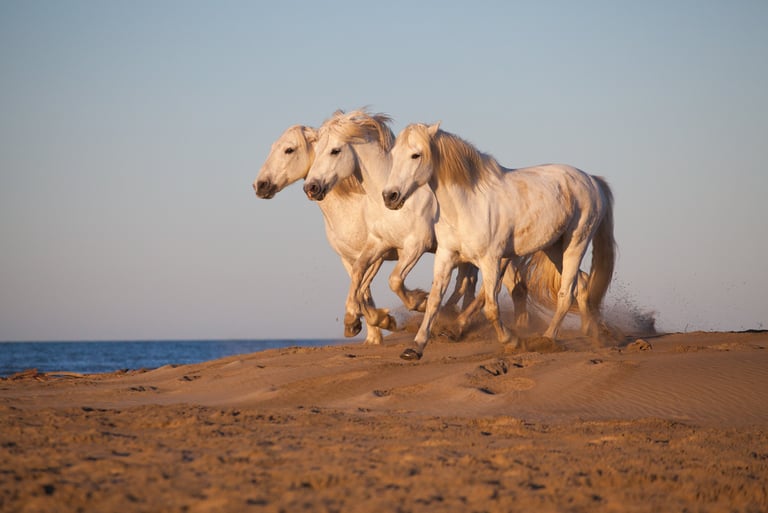
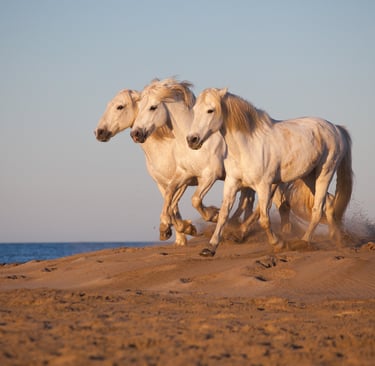
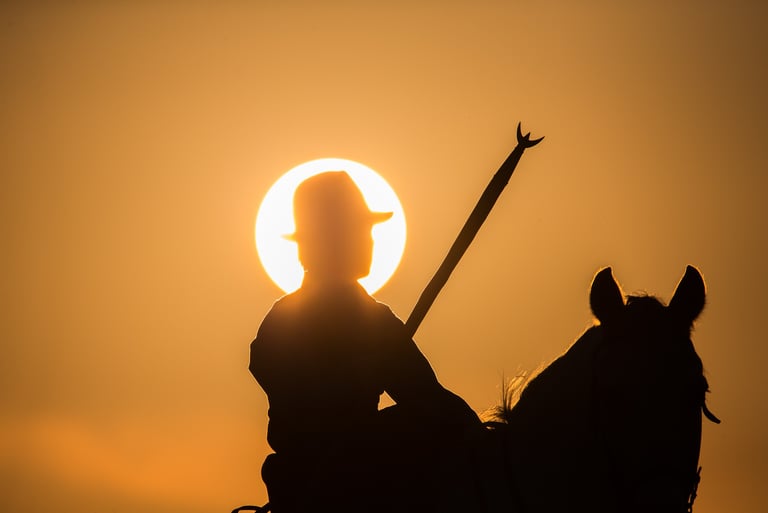
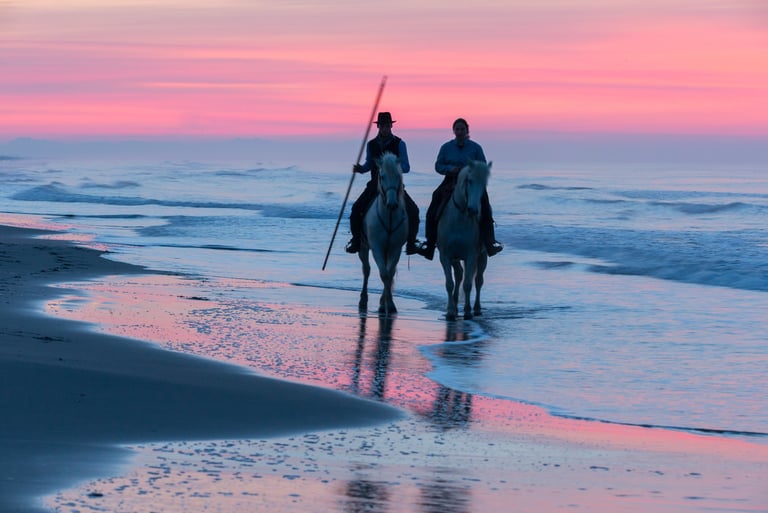
The Camargue offers several visually distinct environments within a relatively compact region. Its marshes and shallow ponds provide opportunities for reflections, silhouettes and dynamic water scenes. Coastal areas introduce open horizons, waves and sand, while the dunes offer cleaner backgrounds, subtle curves and a different visual texture.
These environments require different photographic decisions. Water scenes often call for fast shutter speeds and careful highlight control, whereas beaches and dunes can be particularly effective for minimalist compositions, backlighting and silhouettes.


Birdlife and Camargue Traditions
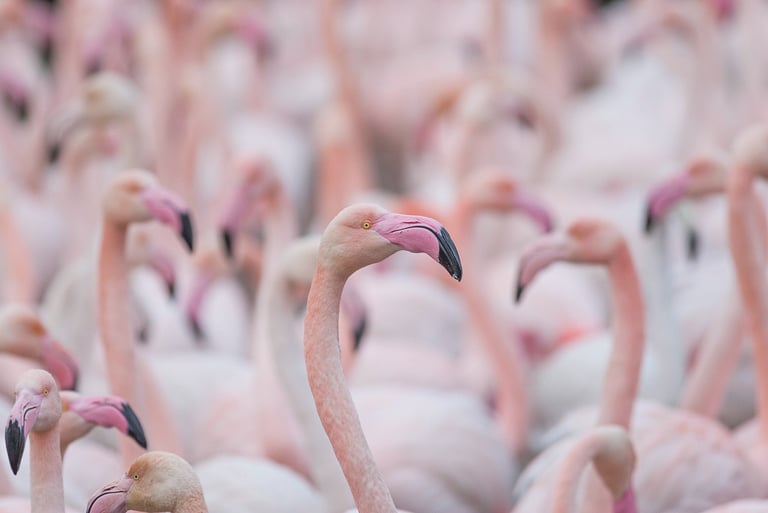
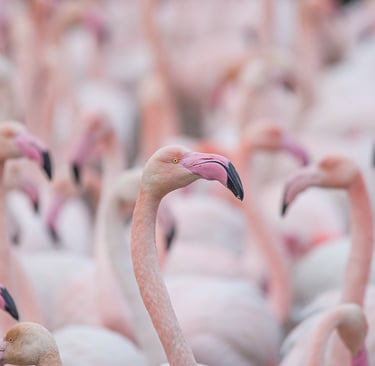
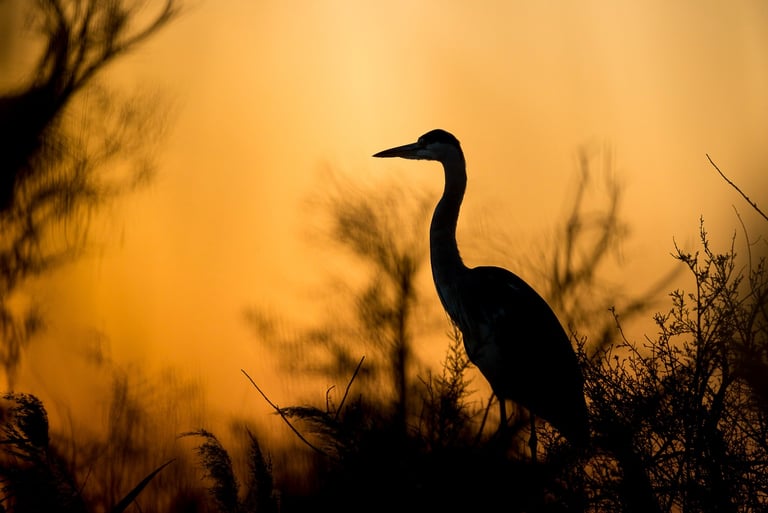
The white horses are not the region’s only compelling subjects. Greater flamingos, herons, egrets and many other resident or migratory birds provide additional wildlife opportunities. Their presence can also add context and a sense of place to wider environmental images.
The gardians, the traditional horsemen of the Camargue, bring an important human dimension to the story. Images of horses and riders working together can communicate the region’s living traditions, but photographers should distinguish genuine working situations from scenes organized specifically for photography. Learn more about this cultural relationship in our complete guide to the Camargue horse.
Access, Ethics and Realistic Expectations
Many of the most photogenic locations are privately owned, protected or subject to access restrictions. Horses visible from public roads or paths may be distant, partly obscured or positioned against unsuitable backgrounds. The iconic sequences of herds galloping through shallow water are generally organized with authorized access and experienced handlers rather than encountered by chance.
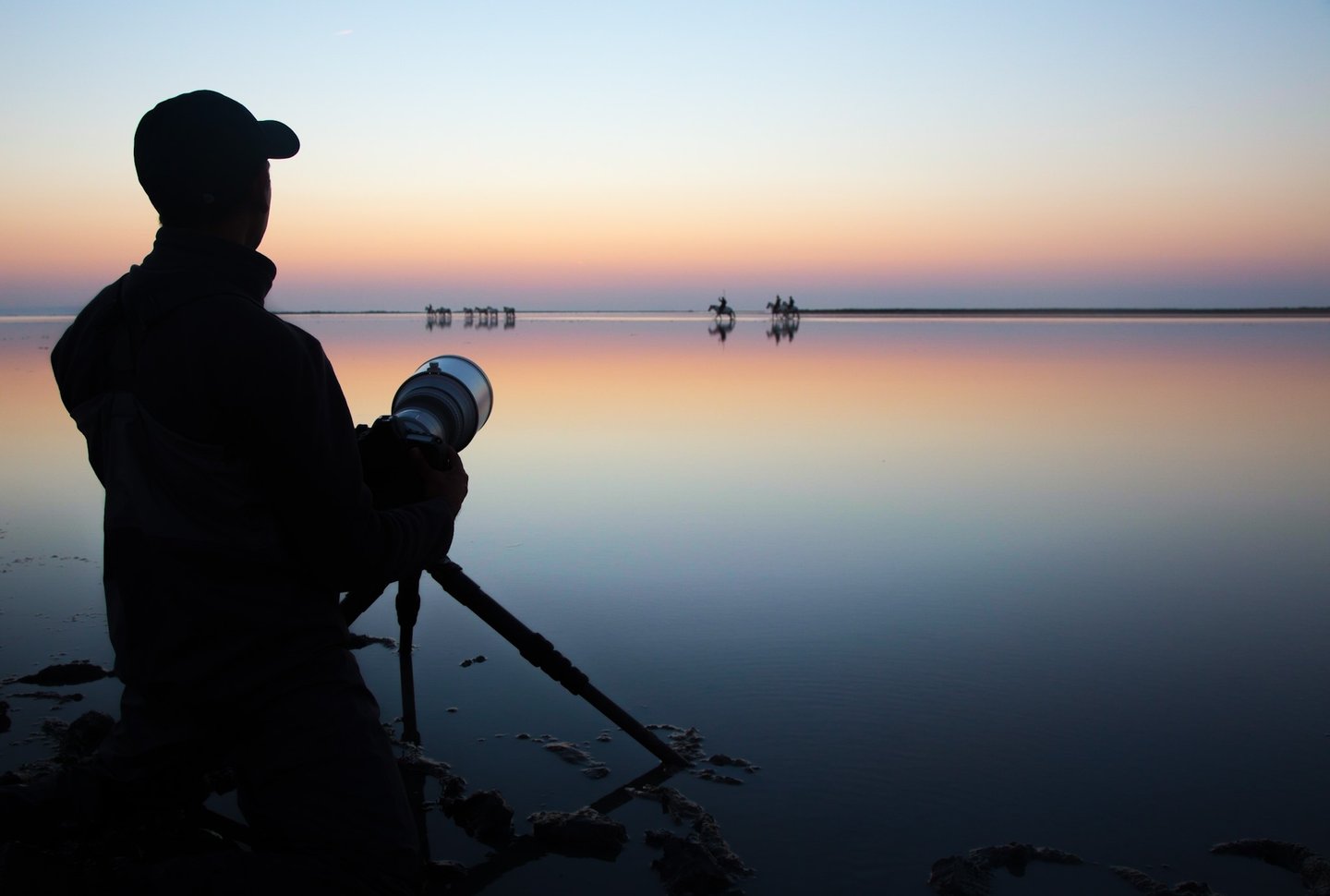
Always respect private property, local regulations and the welfare of the animals. Never attempt to enter a herd, force movement or recreate an action scene independently. Photographers who want controlled access can join an authorized Camargue horse photo workshop, while independent visitors should research public viewpoints and current restrictions before travelling.
The strength of the Camargue lies not in a single iconic shot, but in the diversity of visual stories it offers : movement and stillness, horses and birds, open landscapes and working traditions, all shaped by water and Mediterranean light.
When Is the Best Time to Photograph Camargue Horses
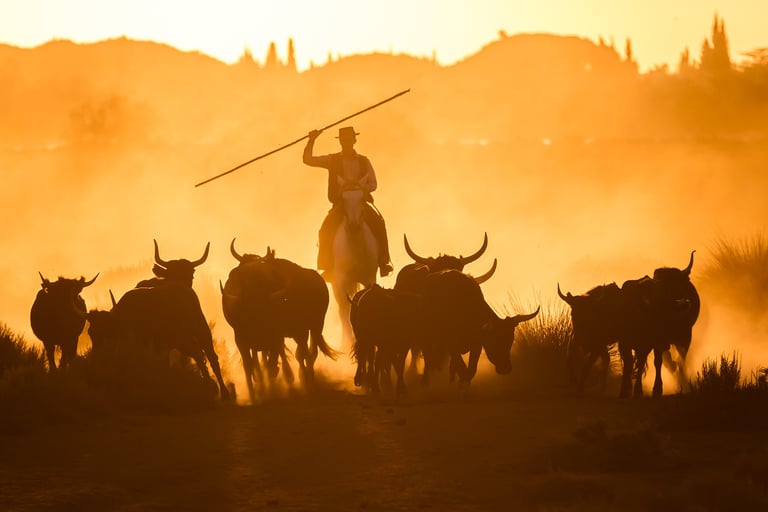
The Camargue can be photographed throughout the year, but each season produces different light, landscapes and animal activity. Spring often brings greener wetlands, young foals and increased birdlife, while autumn offers lower light, more dramatic skies and, in dry conditions, atmospheric dust scenes. Both seasons are generally quieter and more comfortable for photographers than the hottest summer months.
Weather, water levels and wildlife activity can vary from year to year, so no season guarantees a particular scene. Your choice should depend on the type of images you want to create, from reflections and fresh spring landscapes to warm autumn tones and backlit dust.
For a detailed comparison of spring, summer, autumn and winter, including light, weather, birdlife, foals, water conditions and recommended equipment, read our complete guide to the best time of year to photograph Camargue horses.

Reading Camargue Horse Behavior for Safer, More Authentic Photography
Understanding basic horse behavior helps photographers anticipate movement, recognize meaningful interactions and work more safely around a herd. It should never be used to provoke a reaction. The goal is to observe what the horses communicate and to follow the instructions of the gardians or handlers responsible for them.
Watch the Herd Before the Action Begins
Before raising the camera, observe the direction in which the horses are facing, the space between individuals and any change in their overall attention. A coordinated shift in posture or orientation can precede group movement, giving you time to select a background, check your shutter speed and position yourself without rushing.
Ears, head position and body tension also provide useful clues. Relaxed horses generally display softer posture and fluid movement. Pinned ears, a tense neck, rapid tail movements, kicking gestures or abrupt changes of direction may indicate discomfort, irritation or conflict. These signs should prompt greater distance rather than closer access.

Movement, Play and Social Interaction
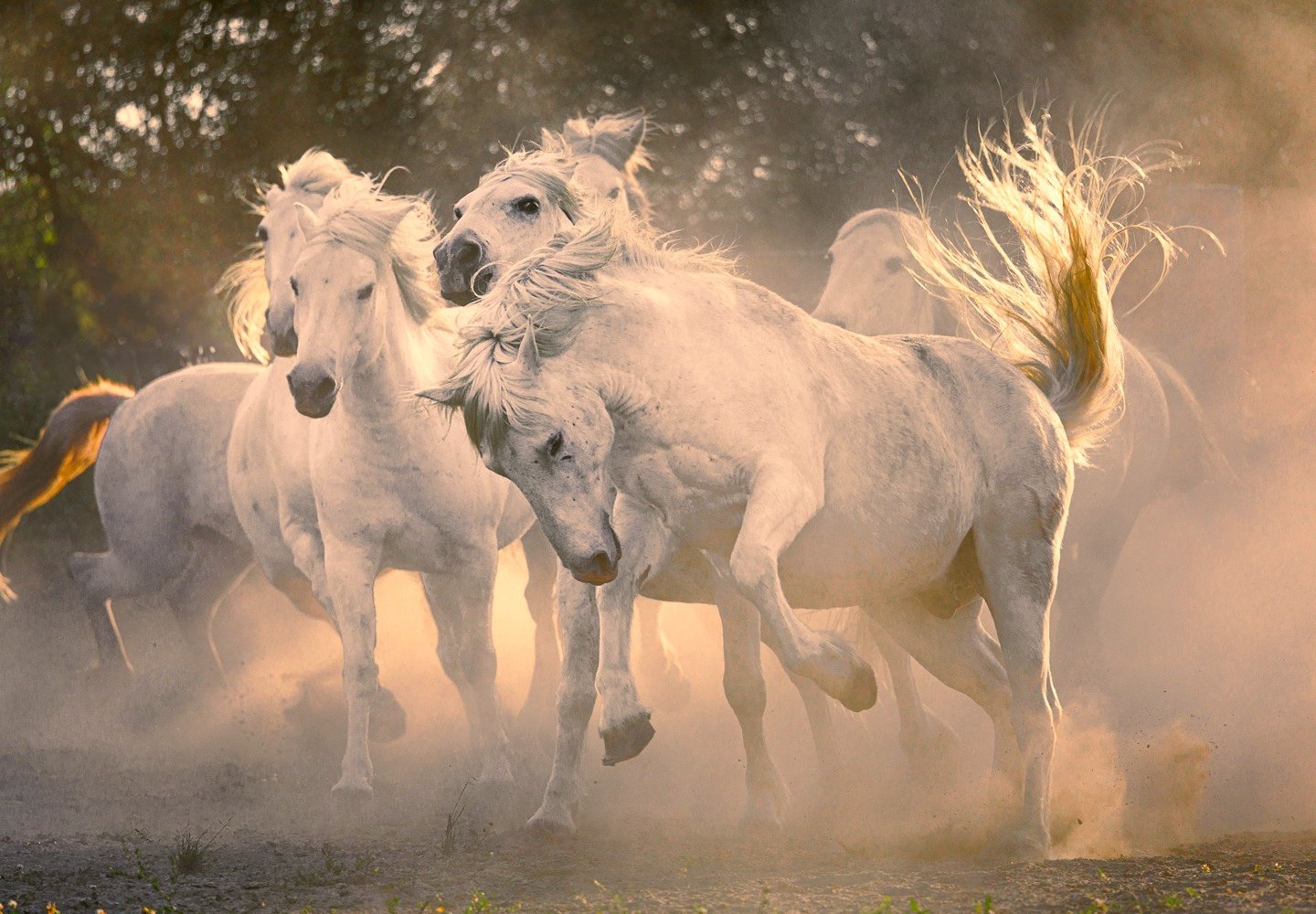
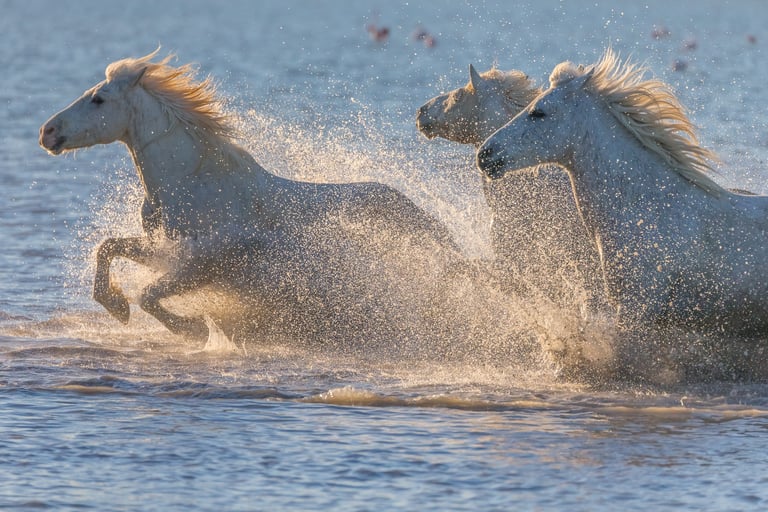
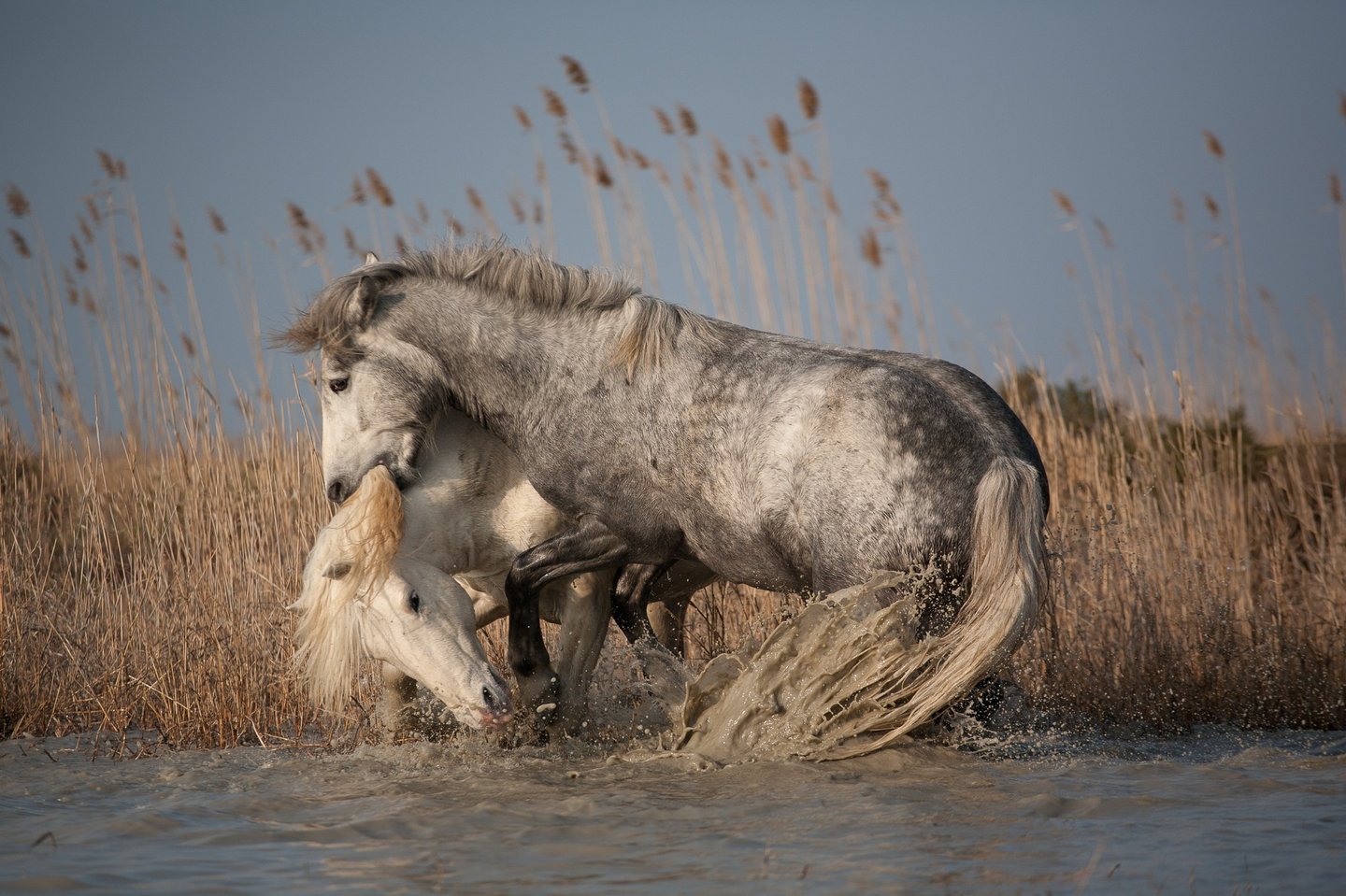
Horses are social animals, and movement can spread rapidly through a group. Galloping may occur during relocation, excitement, play or a response to the direction given by experienced handlers. When horses cross shallow water, the dramatic spray photographed in the Camargue is primarily the physical result of their movement rather than a separate behaviour.
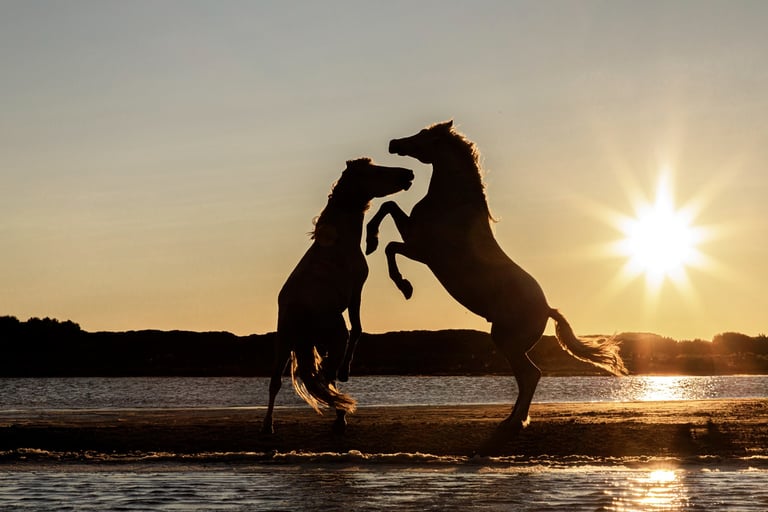
Young horses may chase, rear or engage in playful sparring, while more serious tension can involve pinned ears, biting, kicking or forceful displacement. A single photograph cannot always reveal the cause of an interaction, so captions should avoid presenting every energetic movement as a fight or every organized run as spontaneous wild behaviour.


Safety and Animal Welfare Come First
Never enter a herd, block a horse’s route or attempt to trigger galloping, rearing or fighting. Maintain the position indicated by the gardian, use an appropriate focal length and leave the animals a clear path. If a horse appears distressed, trapped or in pain, photography should stop and the responsible handler should be informed.
During organized Camargue photography sessions, dynamic runs should be managed by experienced local professionals under controlled conditions. Being transparent about this context does not reduce the value of the photographs ; it strengthens their credibility and demonstrates respect for the horses.
For the technical settings needed to photograph fast movement, read our camera settings guide for Camargue horse photography. For focal-length and safety considerations, see our guide to the best cameras and lenses for photographing Camargue horses.

What Photography Gear Do You Need for Camargue Horses
Photographing Camargue horses combines several technical challenges : fast movement, rapidly changing light, reflective water and exposure to sand, dust, humidity and salt spray. The most useful equipment is therefore not necessarily the most expensive, but the equipment that allows you to react quickly while protecting your camera in demanding field conditions.
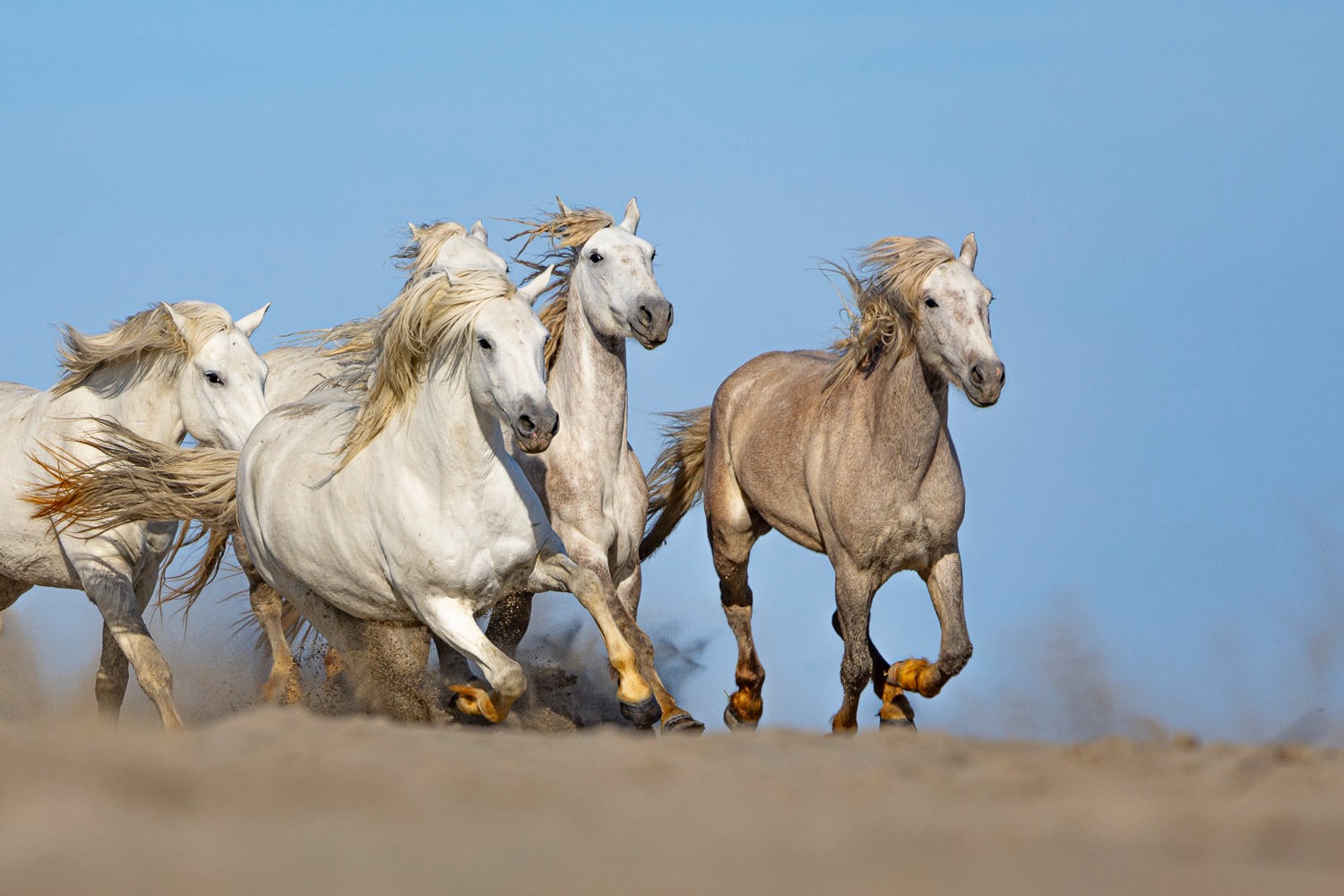

A camera with reliable continuous autofocus, a responsive burst mode and good high-ISO performance is particularly helpful around sunrise and sunset. Telephoto zooms such as a 70–200mm or 100–400mm provide flexibility while allowing you to maintain a safe working distance. If possible, using two camera bodies with different lenses reduces the need to change lenses in sand, wind or spray.
Fast memory cards, spare batteries, lens cloths, a blower and suitable weather protection are also important. Depending on the location and the conditions of your session, you may additionally need waterproof footwear or waders, layered clothing, sun protection and insect repellent. Always confirm specific requirements with your workshop organizer before travelling.
Use the following guides to prepare each part of your kit :
Choose your camera body and focal lengths with our guide to the best cameras and lenses for Camargue horse photography.
Prepare batteries, memory cards, filters, cleaning equipment and field protection with our Camargue photography workshop gear guide.
Plan clothing, waterproof equipment, travel essentials and personal protection with our complete Camargue photography packing list.
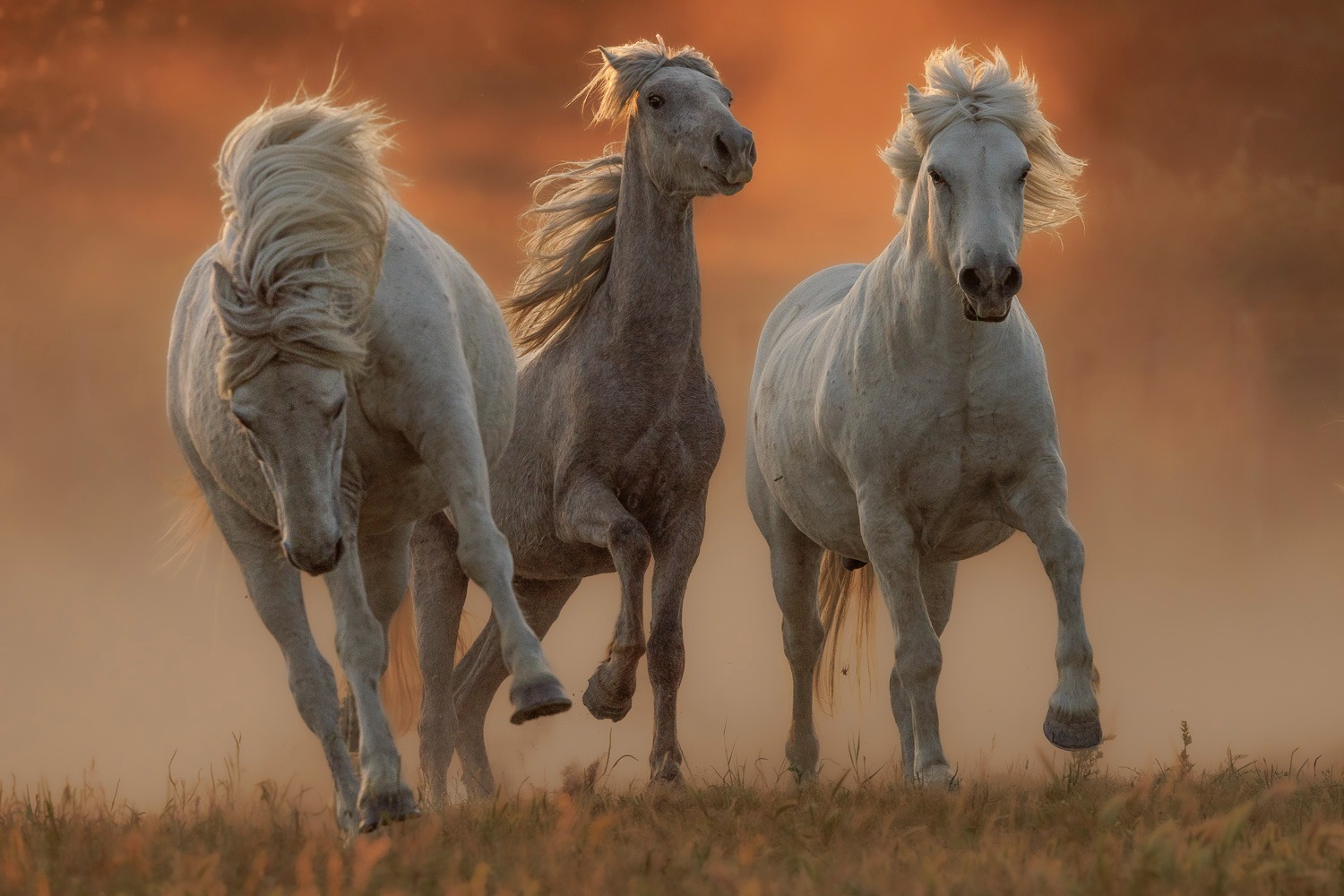

I hope this guide proves useful. If you follow all these tips, your time with the Camargue horses will be unforgettable, and you will return home with memory cards and a mind filled with stunning images.
Put Your Knowledge Into Practice : Join a Camargue Horse Photo Workshop
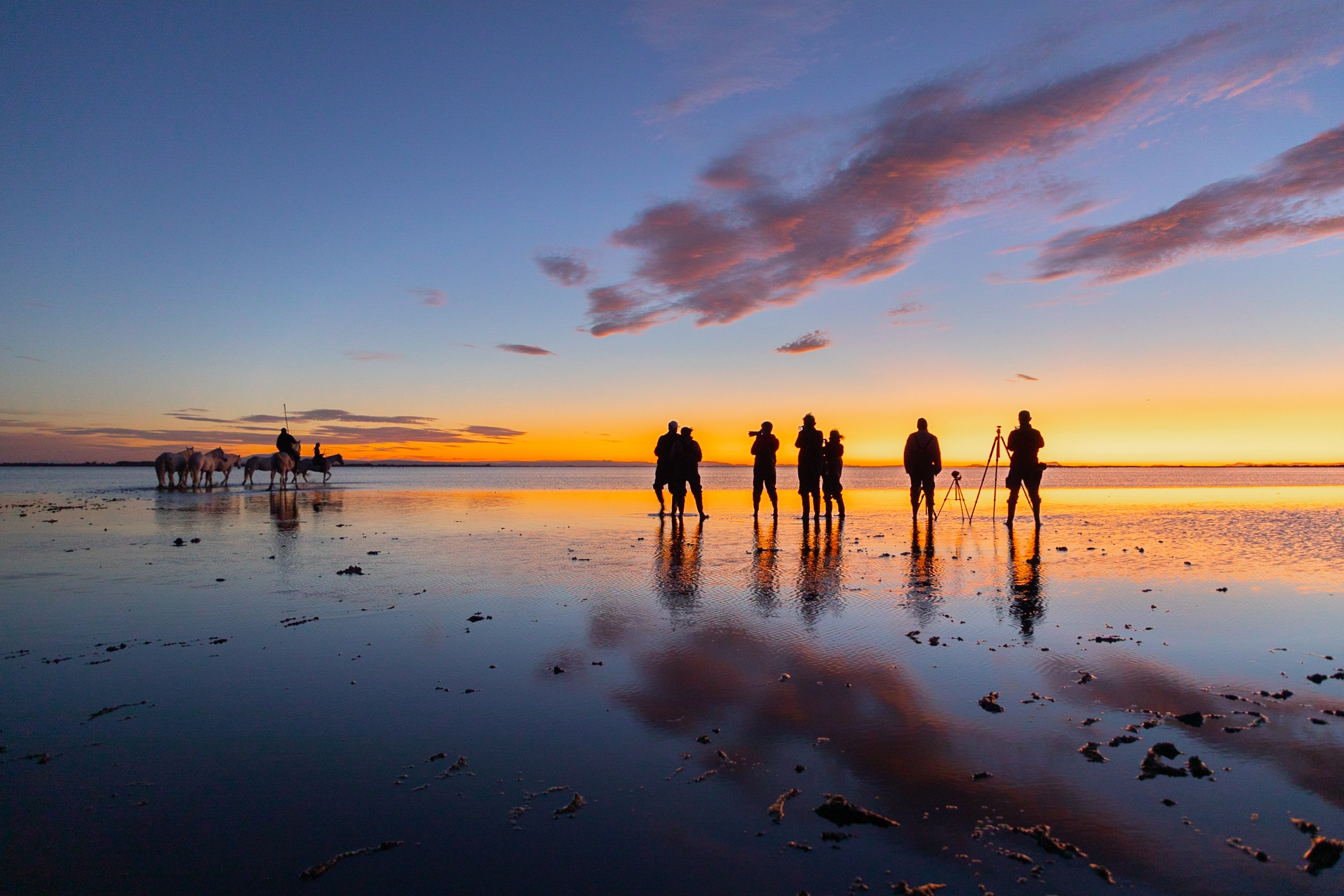
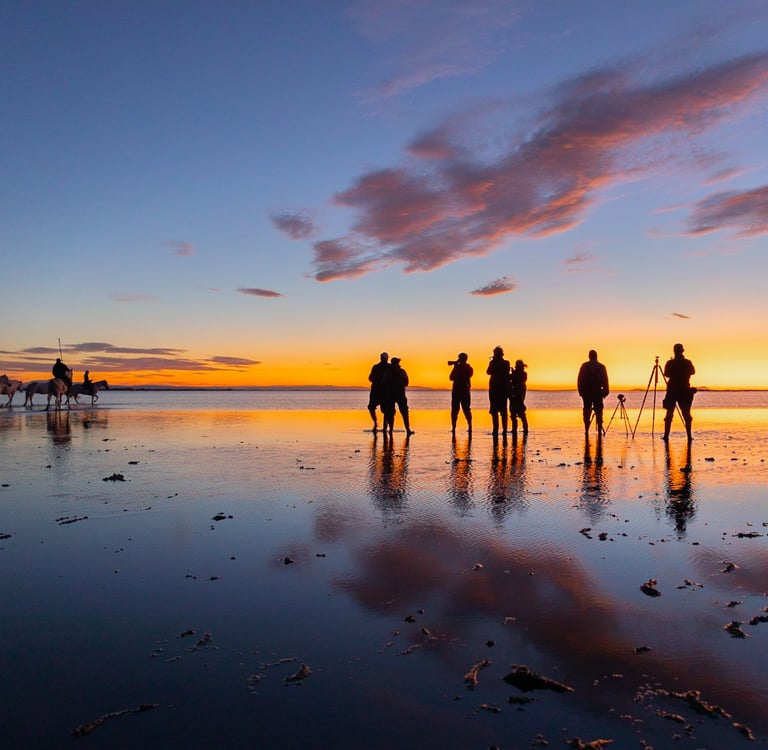
Reading about settings, equipment and horse behaviour is valuable, but photographing in the Camargue also requires local knowledge, authorized access and the ability to respond quickly to changing light and movement.
Patrice Aguilar has been photographing Provence and the Camargue since 1994. His long-standing knowledge of the region and relationships with local manadiers and gardians allow Pixterra Journeys to organize carefully coordinated sessions at selected locations. These sessions are managed by experienced local professionals, with safety, respect for the horses and transparency about how each photographic opportunity is created.
During a small-group workshop, participants receive practical guidance adapted to their experience, including autofocus, exposure, shutter speed, positioning, composition and visual storytelling. The objective is not simply to return with dramatic images, but to understand how to photograph movement, light and equestrian traditions responsibly.
Explore the complete Camargue Horse Photo Workshop, check the current dates and availability, or contact us at contact@pixterra.fr.
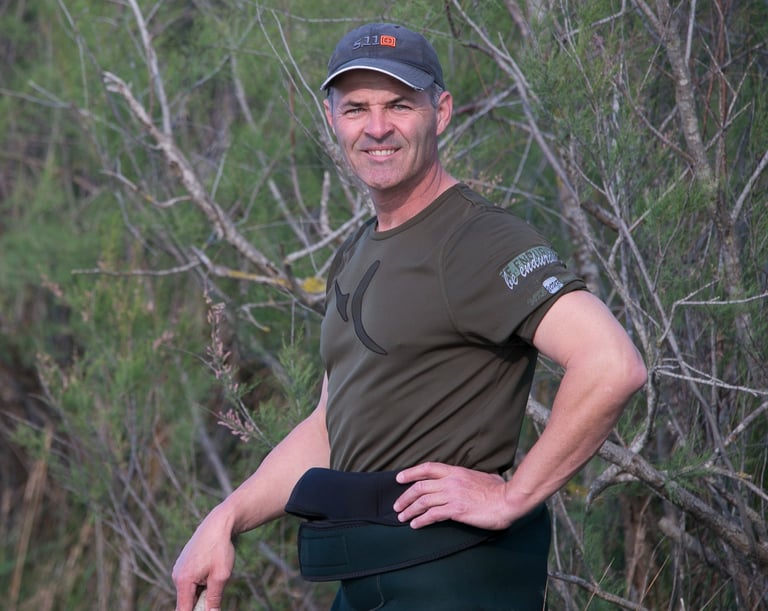
About the Author : Patrice Aguilar
Patrice Aguilar is a professional photographer based in Provence who has been photographing the landscapes, horses and traditions of southern France since 1994. Through Pixterra Journeys, he leads small-group photography experiences in the Camargue and works with local manadiers and gardians to organize carefully coordinated sessions in selected locations.
His teaching focuses on action photography, natural light, composition and visual storytelling, with guidance adapted to each participant’s experience. Every photograph featured in this guide was created through Patrice’s direct field experience in Provence and the Camargue.
What Photographers Say About the Camargue Experience
Bernard Crampon ⭐️⭐️⭐️⭐️⭐️ (SPAIN)
May 2026
Patrice Aguilar is not only a great professional photographer with over 25 years of experience photographing horses and their environment, but also someone who will share his knowledge with you when you need it most.. (Read more)
Bonnie Forrest ⭐️⭐️⭐️⭐️⭐️ (USA)
March 2026
I’ve attended many photography workshops over the years, and this experience was truly exceptional. Patrice has a rare ability to meet each participant exactly where they are, whether you’re just starting out or have been shooting for years.. (Read more)
Lisa Moore ⭐️⭐️⭐️⭐️⭐️ (USA)
April 2026
Patrice has perfected his horse photography with these amazing creatures for many years and his expertise (and patience) is legendary. You won't find a better guide to lead you through the experience of the White Horses of the Camargue.. (Read more)
Frequently Asked Questions about photographing Camargue Horses
Which camera equipment should I bring ?
1 (or 2) DSLR or mirrorless camera is recommended, together with:
a telephoto lens (200–600 mm ideal)
a medium zoom (24–105 mm or similar)
spare batteries
memory cards
a monopod / Tripod (optional)
A detailed equipment guide will be sent after registration to provide you with a more precise list based on the selected workshop.
Will I need waterproof equipment to photograph the horses ?
Not necessarily, but we highly recommend bringing waterproof protection for your camera and a small towel.
Several horse sessions take place while standing in shallow water.
A chest wader rental service may be offered to participants upon request.
Are the horse sessions guaranteed ?
Yes.
The horse sessions are privately organized in advance with trusted local breeders and horse owners.
Unlike public demonstrations, these exclusive sessions are specially designed for our workshop and represent one of the benefits of this unique experience.
What makes our Camargue horse workshop different from visiting the Camargue independently ?
This is probably the most important question.
The images featured on this site are only possible thanks to more than 25 years of trusted relationships with local breeders, Gardians and landowners.
Many of the locations and horse sessions are private and simply cannot be accessed independently.
This workshop offers not only photographic guidance, but privileged access to experiences that very few photographers will ever enjoy.
Which is the best time to photograph Camargue horses ?
Spring and fall.
While these iconic horses can be photographed throughout the year, spring and autumn are generally considered the most rewarding seasons for photographers, thanks to mild temperatures, shorter daylight hours, and fewer crowds.
Are Camargue horses wild ?
No.
Contrary to the popular belief, there are no truly wild horses in the Camargue. However, they live semi-wild within vast enclosures know as manades, roaming freely with minimal human intervention, which is why many visitors mistake them for wild horses.
LOOKING FORWARD TO SEEING YOU VERY SOON IN THE CAMARGUE !!!
PixterraJourneys
Field-craft and photo storytelling in Southern France.
Join us
contact@pixterra.fr
Gignac la Nerthe, Provence, France
Booking open for Autumn, Spring & Summer
© 2026 PixterraJourneys - Selected regional access options for passionate photographers.
Provence & Camargue